Today was to be the new routine I’d set out for myself to structure the day. The alternative being where you wake, spend untold hours in thrall of the internet, then drop out of bed log-like, and rustle something up in your underwear (who needs PJ’s?), perhaps staring at a microwave woodenly or eating jam back under the covers, to more internet, hours irrelevant, each day or night merging and drifting like clouds. To start smelling, hair/ beard/ armpits a nest, clothes a memory, monosyllabic, perhaps drooling.
Against this scenario I aim to wake, and:
check the situation online -the ubiquitous news sites and chat fora, an hour tops.
Then lug myself to wash, do my hair, choose some proper attire (avoid ‘comfortable’ attire), perhaps a hat why ever not.
No breakfast, I’m never hungry in the mornings and it’ll save on the food. Instead write, work on the book, the diary, creative stuff like starting a photo essay.
Tidy, the little odds and ends. To music.
Make lunch, sit down to eat, communally if plausible.
Learn a language – carry on with online French lessons, start Mandarin.
Exercise. Make use of all our gym stuff I salvaged from the communal one.
Watch an episode of something, hour tops. Take a very privated walk, if in lockdown just the gated area (the postwar Estate was fenced off in the Eighties due to crime, a process now illegalised in London but done so before the law came into force).
Write on the book
No tea, dinner.
Check in on the craziness online.
Movie
Wash, cuddle, sleep.
Well one out of two ain’t bad. Will try harder.
Yesterday it had gone swimmingly, I genuinely felt better for having done all of that. Today I spent hours online in bed, fell out to brush my teeth then fell asleep again for 4 hours. Not the best start, tapping away in my dressing gown, but onwards.
Yesterday I got news from a Civil Servant that they’d been told not to enter London from today, and that the M25 was about to become a new non-porous border. Then frantic messaging to all I knew on the coming lockdown. It even got leaked to some of the papers within the hour, not just in the UK but in Italy, who printed that London was falling. Coupled with that was footage of soldiers marching down our local High Street, that set Twitter aflame with rumour of the impending sanction.
However we’ve all woken up, spied people on the street (shopping as per norm) and realised this has not come to pass. The soldiers snapped in Clapham were cadets, off to a local training centre, and apparently they do that every week. Well, now I feel a bit of a plum, having told everyone that’s dear to me (and discovering only then that some of them had fled to their native France and Australia), but assuaged by the fact they then probably did the same. The papers are now hinting it will come in force tomorrow, Friday. Luckily we’ve done our hoarding already, and will miss out on the shopping circus every supermarket must now be in, their shelves emptied and customers only allowed 3-5 purchases a pop.
I saw a video today of East Asian women in a supermarket being harrassed about wearing face masks, and why they were covering up they were sick. The accuser then summoned the staff, after which the group were thrown out by the security guards. I can’t describe how palpitating a mix of rage and sadness I felt watching that, especially with a bit of a familiar past to draw on.
East Asians are the most likely to be racially harassed, to have racial violence upon the person, and the least likely to be promoted despite having the best grades, performance, and education levels (aka the Bamboo Ceiling). East Asians come shackled to the idea they are meek and thus an easy target, and living as one is a minefield, that directly affects your life plan no matter how hard you try and ignore it.
The ancestral culture an automatic mockery from the sound of the language to the food we eat to the way we look, to the regimes we entertain, plus the usual alienness of blood libel – in short no matter how laurel-lying we are, we’ll always be lesser -in emotional intelligence, or EQ, in culture, in viability. Any intelligence is the semi-autistic variety, those world-beating grades or IQ scores passed off as rote learning, a stark lack of higher job prospects excused by a bundle of ‘studies’ projecting it’s our Confucian upbringing and cultural cues to blame.
-Despite the fact there exist managers across Asia, and they function just as well, and not the usual workplace bias as suffered by women, other races, LGBTQIA, the disabled, the overweight, the accented, and pretty much anything that’s not the Tall Heterosexual White Male. Sorry if you happen to be that, but you get a privilege that’s not in your control -to be treated more as human, the rest more as sub. Not your fault, but we treat you better, all you 5%’ers of the world.
And don’t even get me started on relationship prospects, where the swipe is the last great bastion (and indicator) of socially acceptable racism. How EA men fall short, so to speak, tarred by the same tiny brush that refuses to entertain the thought it might not always be the case for every er, member of a 2 billion strong people. I’d get it out, but that would be positively louche. While women are rocketed way higher, in the objectification kind of way, you’re either a gogo girl or geisha, just don’t take your make up off. And never, ever burp or fart or nowadays, COUGH.
I could go on for days about this, thanks to an upbringing on a skinhead /army estate in the metro’s most racially divided wards, in their glory years of Thatcherism. The kind where, like missiles of a bygone age, bricks, sticks and stones came over the wall, 6 year old sisters got beaten up, shit got smeared, words got sprayed, cars got leaned out of and flob got thrown. Where walking past any playground was to be avoided, and every street heads swivelled to wherever you were GPS located, meerkat style. Then your schools disbelieving and accusatory, pointing those same fingers due to essays too accomplished. Even after I left I’ve come across it in almost every workplace I’ve had, sometimes overt, most often insititutionalised. And no one fucking talks about it, how it’s acceptable to say and do certain things to one race but not the others. A facade I sometimes feel only I see.
Says it all really, you not only have to battle the damn street, but the establishment, and a complicit society. That was the Eighties and Nineties, when people were less ‘woke’, yet now I see it re-emerging again in the Twenties, in light of this first globalised disaster. I see how this spread from a culture that apparently tortures animals as per norm (that evidence of low EQ, inhumane), eating them in disgusting ways (alien, blood libel, civilisational war, dirty, laughable), then spreading it through complicit government cover ups (not to be trusted, inscrutable, indoctrinated). Not that most people go around thinking all those things, but it does reinforce the assumptions they make when coming across it.
When I tell people the things I’ve seen over the years they’re appalled, and all this build-up over the past few months is bringing it to a crux. The Taiwanese girl at work who a customer was ‘disgusted’ with, and dropped her money on the till in a show of non-contact, the unremitting stares I get on the street, Benny Hill style seat-swapping on the bus, then reading the stories of the randomised people assaulted, often women. The humiliation of public tirades, avoidance and harassment on PT (to the point many changed their commute), the pupils being sent out for coughing or getting their jaws broken in the playground. People turned away from every hotel and now more, of complicit businesses backing up the racism.
A bitter note in the fear. It doesn’t help, these divisions, these attempts at blame. I do see that people can’t hack it and have to take it out on another -a show of weakness rather than strength that’ll always manifest our societies, on all sides. From the idioted Chinese generals hinting the disease was left by the US Army during their recent training exercises in the area (with reminders the U.S. spread Mexican Swine Fever that killed 1.4 million), to the insistence it’s a ‘Chinese’ disease by POTUS and his inner circle. All alongside the usual calls in the press for who to crucify even as we wallow with greater priorities right now. My friend who has Obsessive Compulsive Disorder is finding things harder, his fear of germs ratcheting to a peak on top of everything else. This is similar for East Asians, myself included, the layers of fear on top of fear.
Ok, breathe (through face mask I’m too scared to wear).
I suddenly feel now I’ve written too much on this. A Pandora’s box I always look back on and get embarrassed, if ever I pique on the subject. It’s a bit like namedropping Dinosaurs and a love of jeeps in earshot of Richard Hammond from Jurassic Park. But let’s not talk politics, despite it being so Right Now. I even castigated finger-pointing only what? a whole 24 hours ago in the last post. Some notes:
The tenancy agency rang back (sound of numerous phones going off in the background), sounding annoyed and terse -I cut to the chase and got him to say basically nothing had changed for anyone who couldn’t pay, as if coronovirus wasn’t on, and that we’d contact him from there if we couldn’t. The government announced shortly after there would be some provisions of people like ourselves, private renters without income/ new dependents, which we await the deets with bated breath, excuse the pun.
The streets were yesterday moderately populated (although nowhere near as London normally is, which has nothing but crowds all day and night), of the usual hoarder hordes but also quite a few trying to make the best of their new time off, with the parks and cafes full and the pub to boot, a group of men carrying packs of lager somewhere. The sun had come out. Today is grey, the train station that faces our window silent, when usually it’s a constant bevy of noise and announcements – it’s the world’s busiest with a train on average every 30 seconds, a vast interchange rather than a main terminus, of which London has nine. It’s obsolete now, along with 40 random tube stations closed.
I am thinking of cutting my hair. Maybe dyeing it, my one chance to go all K-Pop and crazy without work to worry about. But then I want it long on top for my trip to New York, a holiday planned pretty much all my life and set for May, though likely it’ll be canceled. Such a distant perception these days, almost surreal when you scroll back and see images of people outside enjoying themselves, even just vague figures in the streets doing their day to day without such a specific care in the world.
Some leading members of government over the other side of the pond are calling it now the end of America. The effect of that on the populace, dealing with no end of shit right now, is not heartening, at a time we need it most.
China has announced zero new cases, for the past few days its handful have been coming off the planes. The web is alive with disbelief and recrimination in light of this, rather than hope.
Oops, there I go again. Politicising thingies.
On a smaller scale, got some tidying to do. J will likely want to polish his silver, a thing he does for his work which I see in a sense of calm, and the appreciation of detail, and beauty. We need this right now.
I will get changed. I will do my hair. I will cook lunch. I will write some of The Book. I will not look at the news. I will read a book. About a house in the forest.
Today I woke to the same routine these past few weeks, increasingly set every time I opened my eyes and reached for laptop or phone. Then to scroll bleary-eyed through the news of ratcheting tension, emblazoned in headlines on school closures, lockdowns, crashing markets, panic buying and ghastly figures updated every hour. They say the higher a death toll gets the less people can conceive it, the scale of destruction getting more abstracted the worse it is. I don’t think it applies here, in this instance where we’ve tracked the gradual rise into exponential reaches that double every three days. The lists of countries multiplying alongside, the imagined scenarios fueling a sense of global doom.
At one point last night, after watching a mindless action movie on Netflix (Pacific Rim II, lurid, banal, unlikely to have a third) I stopped and my ebullience suddenly ebbed. Was this the end of times, was I unlucky enough to be living now? A once in a lifetime experience they say. But then we should remember that millions have had this same clouded prospect, not just clouded but tornadic – Syria, Iraq, Yemen, DPR Congo, Libya, South Sudan as society was whipped away around them. These conflicts prove just as abstracted to this day, when we are a mere spa break in comparison of worry and anguish, and the uncontrollable, unaided death of your loved ones.
My partner A is now out of work as of yesterday, my flatmate J awaiting his fate in an announcement today, where he works as head of silverware in a West London auction house. We drafted a letter to the agency about our situation and their avenues of support available for us not being able to pay the rent in these trying times (yes we used that phrase, at J’s historicist suggestion). They must be inundated.
Then it was the phone call home, that phone call I’d been dreading all day, to find out the situation with The Family. Mum, 77 and still working in a factory, in part to support my sister (long story, do ask) may be quarantined as high risk for up to 4 months according to the government advice, or should I say, hint of what is soon to be imposed. My other sister in the process of moving back to the UK from the Netherlands, and possibly also out of work. Well, that escalated quickly. Almost overnight faced with the prospect of four grown dependents plus myself on the one wage.
Thankfully, although the Natural History Museum closed its doors yesterday for the foreseeable next two months, I will still be paid. Turns out so will Mum, and my sister in the Netherlands. She started her own company in science writing (I’ll just namedrop Atria Communications here) and is working with the disease experts, and now mobile. The acronym WFH has become suddenly relevant and widespread -though commonly misread as WTF, it correctly shares the same impact of the word. So down from a possible four to just a plus one. I should be very, very thankful, I’m lucky enough to be waged with the government, and my mother and sister are in the science sector.
Most people I know are not so lucky, living from paycheck to paycheck, often abroad from their homelands and familial support. It’s stark how very quickly the gig economy has been so exposed to economic ruin, not to mention the fragility of property bubbles and rental market. Notably in London where no one working, middle or even upper-middle class can realistically afford to own a property, unless you like converting a walk-in closet, complete with a shower under your bunk bed that dribbles onto the toilet. Or a bed-in-shed in Slough, one in a rash of tens of thousands now hidden throughout London’s leafy suburbia of illegally built, money-making favelas. Thus a vast proportion rent their abode, and a vast proportion are now looking at homelessness. How did it come to this?
I saw four homeless people today, three I suspected of being the variety who beg but find sheltered accommodation at night (appearing well fed, dressed, clean, I know a roster of them), but one who was genuinely sleeping in a streetside alcove, wreathed in soiled camping gear. I have no idea what will happen to these people. I also saw the very old, frail, and the heavily disabled, all of them on their own, clutching empty bags on the way to the shops, and the circus that awaited them.
Yesterday a woman in a wheelchair blocked everyone from getting baskets as she tried to get her goods into one (she was buying a large houseplant, I have no idea what for), but I almost caved right there and cried. I helped her out, but later heard others asking her if she was okay. Thankfully there’s still that. The mood was tense, every face deeply serious from staff to shoppers alike, but no one busting into arguments, slappy fights or racing down the aisles, nor complaining about the epic queuing or emptied shelves.
The people are panic buying -game theory really, if one person does it everyone else has to, or they’ll lose out. Then we complain about everyone else, like how we moan about the traffic while sitting in it ourselves, or how the lovely tourist sites are overrun with tourists these days, as if we have a privilege to experience it over any given member of that yappy, sportswear-laden tour. These days is a potion of concern, for ourselves, our families and the disadvantaged, in an uneasy mix of conflicting priorities, as we go for that last toilet roll, as we see the pensioner standing destitute behind us.
The UK government, to much fanfare, had recently announced it was following an experimental policy of mitigation rather than extending the containment stage. Hence why, in contrast to our European neighbours, there has been no lockdown, not of schools, of pubs, of gatherings, of farming festivals and horse racing stadia, of incoming visitors, or people in general when it could have made a difference. Despite that butterhands China already provided an MO in the form of Hubei Province, roughly the same size and population of the UK, that has proven to work, where we can learn from their open-sourced mistakes and successes. However one of these scenarios also happens to be cheaper on the economy – for all the talk on ‘sombrero flattening’ no measures have been taken to effectively do so, as yet:
The proven path so far is lockdown, infrastructure to feed that lockdown, ICU’s, and draft hospitals, with strict quarantining (where the staff get suited up 2 or 3x over, and no object entering those wards can ever leave again, hence why many healthcare workers had to buy new phones to discard later). It saved China, but took out two months of its economy. Britain seems to have tried to have its cake and eat it in contrast to the rest -to let the infection move through the populace while the elderly would be housed away, thus saving the bedspace.
However, the Imperial College yesterday released its models on what this would result in, to both the UK and US govts it advises, alongside publishing it to the press. Over 200,000 dead and a healthcare system overrun to the scale of 8x over, and possibly 10x that for the States. This is why the government is about-facing to change tack once again, and why a lockdown is likely to be imminent.
I cashed in an electronics voucher today, £100 worth, to buy an upgraded phone I didn’t really need, but in order to save my purchase should that company tank during the lockdown. Everyone in there was doing the same. The three workers were gloved up to the max, and wiping down everything passing over the counter, while thrash metal played apocalyptically. A young Spanish guy bought the phone I wanted, his old phone recently kaput and having little choice but to buy a new one before his replacement could be sent (if ever it would reach him), in a time when he could contact family, and where communication would be the last link that cannot, should not fail, no matter what.
Trying times indeed. I often think of what is important to me in life, often. Everyone is saying it’s like a film. Yet this is not so much a Hollywood disaster with gung ho renegades, rousing speeches and wavering flags in the background, to fistpumping and flowering explosions -rather it’s more a surrealist study in existentialism. The world is increasingly looking black and white, and poignant. I’m not looking forward to an increase in pace, though admittedly holding out for a Deus ex Machina (my First World privilege right there) to throw some contrived lifeline. We can but hope, to Keep Calm And Carry On.
Just try not to remember that the phrase was dreamt up by a wartime government facing imminent invasion and, unknown to them, the planned execution of the entire adult male population. Thankfully that never transpired, and if we keep our heads level and remember we’re not facing Mad Max or alien armies here -and at worse 3% mostly will succumb at or beyond their given life expectancy anyway -we can get through this together.
Game theory once again applies: help out your neighbour or stranger, and the same will likely happen to you or your loved ones wherever they may be. But know this, we’re in this together whether we like it or not. There will be forces, currently garish in the press pointing fingers between countries, races, candidates, exacerbating desperation in desperate times, but we need to collectively fight from the same ground against a common enemy. Hand washing, WFH, WTF, losing support networks, social distancing yet looking after those in need have all already united us in a collective experience, we just don’t need more rule and divide. And neither should we enable the pathologically inclined who do so -those on the sociopathic spectrum in power or with a podium, cannot help it, bless em. We however can. Don’t feed those clicks.
In short, we have enough on our plate for going political or divided right now (if we must, we can enjoy all that later). By all means, exert your pressure, demand, let your voices be heard when things are found wanting, but do the finger-pointing later. Let’s just get through the damn day.
In short: it’s the borders, but not as you know it.
A continent loosely summed up as 750 million people in the more northern climes of the world, famous for its history, heritage and export of culture (and peoples).
But let’s look closer at the geography: the world’s sole ‘landmass’ delineated from the rest not by seas but mountain ranges (do ignore the Indian ‘subcontinent’, China or Eastern Africa that could easily do the same) – with the Caucasus forming an adjunct against the Middle East at one end, and the more spurious boundary of the Urals at the other. Never mind that this range peters out uncharitably 600km from the Caspian coast, and is low and heavily gap-toothed anyway – infinitely porous for the peoples of the Steppe, and to which White Russia has long suffered from… no, THIS is the boundary that claims itself a stopper against the rest of the multitudes. That declares itself more than just a peninsular of Asia.
The idea that all continents are defined by their physicality demonstrates European exceptionalism – insofar that the idea of Europe is in reality more based on ethnicity, thinly veiled. That what defined this continent has long been the triptych of pale skin, Caucasian race and Christian culture, all but glossed over in textbooks to this day and accepted as an unsaid, unquestioned norm. With this idea comes the attachments of history, a richly influential vein that runs through collective peoples who went on to annexe 3.5 continents other than their own -the two Americas, Australasia and Asia (thanks to Russia/ Kazakhstan). The greatest source of immigration the world has ever known and likely ever will. In short Europe is a sanctum alluding to the ‘old country’ for many hundreds of millions outside it still, and an idealistic narrative on governance to even more – a cultural source code for successful nations if one may.
Ethnic map of the world by Haplogroup:
This veneration is both the winning laurel and Damoclean sword. On one hand its historic urbanity, motifs, cuisines, languages, style and arts continue to draw visitors and investment by the billion. Yet its exceptionalism can also jar with the demands of globalisation, and demographic paths toward a more mutually reliant, Benneton ad of worldly oneness. As the per capita incomes of the Developed World and the Developing World (once known as the Third World) begin to converge the eyeliner so long denoting Europe as belle of the ball is increasingly consequential: attracting ever more suitors but also a more fragile sanctimoniousness. Watch as the denizen of ambassador’s balls hides from the fawning attentiveness of her retinue, while basking in their thrown cash.
For example, Europe’s plinth-like status brings in 671 million visitors (2017, accounting for 57% of international travel), with $767 billion investment to local economies – by far the largest destination for tourism, immigration and FDI. New housing, continents removed, still delusionally aspire to Tuscan villas, Norfolk farmhouses and Berlin apartments whether they be in the sprawl of the Texan interior, embattled Israeli outposts or estates in China’s third tier cities. The English language/ suit has become the uniform for global professionals, and Greek democracy, Italian art, French enlightenment, English industrialisation, British-Russian economics and Swiss modernism have been adopted as worldly norms. Parts sold as templates for governance and contemporary culture.
Looking back on this weight of far-reaching achievement, pride becomes an easy reaction, despite the cultural piggy-backing, technology transfer (strictly limited between brothers-in-arms -read: White countries), and disparate achievements conveniently united by one race, with a redrawing of boundaries as and when needed. All cultivated under the umbrella term of Westernism but not so subtly redolent of supremacism too. Not to mention a more painful eyeballing from history on an inheritance built on colonialism, slavery, incessant power struggles, foreign invasion and hierarchical inequality perhaps a little more avid than the rest.
But Europe today is also a region most angst-ridden about outside influence and historic navel-gazing. It’s increasingly susceptible to modern day demagogues, where every major economy is now, for the first time in a century, either right wing or in coalition with the far right.
To start, one cannot possibly quantify 750 million people, 130 languages, 50 countries, 87 ethnic groups and countless cultures and histories as one. Witness the past attempts to do so, whether through bloody world war or cultural hand-wringing when pacts such as NATO or the EU sacrificed imagined sovereignty for greater geopolitical win-win. The continent is still a disparate collection behind the flawless face, with infighting commonplace between countries, and regions within – not to mention many societal pitchforks readied for the stream of newcomers, whether they be from the continent or outside.
Separatism within Europe:
Yet should Europe give up on its institutionalised veneration on what it thinks it is to be European – rather than by dint of pure geography – it would find it can marry contemporary progressiveness with a rich past and continuation of traditions. Look at the record of the Nordic, Alpine and Benelux nations, world leaders in education, quality of life, social justice,economic performanceand environmentalism coupled with a rich heritage of culture, architecture and the arts, all within the same breathless sentiment.
But contrast that with worrying support for Le Pen, Jobbik, the Freedom Party or Brexit, coupled with instances of hate crime, terrorism, media-fuelled xenophobia and a stout lack of charity for the current refugee crises. For perspective the vast majority of the worlds 68 million refugees flee to neighbours within the already embattledMiddle East and Africa – some of which have become refugee-majority populations within the last decade. For all the furore ‘only’ 1 million of the richest affording the crossings to Europe.
Also note how Austriaand Denmarkstraddles both these perceptions – open progressiveness with reactionary populism, which lends to the fact no part can be summarised despite all intent. Should Eurocentrism take down its artificial borders both in mind and physicality it can limit the damage wrought by a generalised decline in birthrates and productivity, both demographically and culturally. When the ‘old country’ no longer negates the idea that all societies are new, and that they have always had to be in order to survive.
Europe is in short a wondrous, rich tapestry of histories and cultures; it does well to build on it. But it also does well to remember how porous its borders were in the age of empires, whether being invaded and influenced from outside (Egyptians, Phoenicians, Persians, Turkics, Huns, the Silk Routes, Moors, Mongols, Tatars, Ottomans) or doing the invading and influencing of the outside (Greek -Macedonian, Roman, Portuguese, Spanish, Dutch, British, French, Russian, German). All that so lent it the multitudinal aspects to build and importantly, trade on.
Les trentes glorieuses:
This is not to overlook the genius of democracy, the Renaissance, the Enlightenment, the Industrial Revolution, but they were not entirely standalone as we have come to assume, and with often fore runners abroad, from China’s equivalent scaled Industrial Revolutionin the Dark Ages, to Mughal manufacturing that took a quarter of global GDP and Ming Dynasty naviesthat operated history’s largest pre-industrial ships, industries, and explorations. The first shoots of democracy in Iraq and India, alongside the worlds first cities, or the first modern warfare.
Random details in the last mention alone demonstrates how far they got, and how little we know from our Western-centric history books. The attempted invasions of Japan by the Mongols was the first mechanised war, fired up by the Mongol-Chinese who operated the first guns (‘fire-lances’), cannons, mines, sea mines, grenades, rapid-fire crossbows and Korean ‘hwacha’ that could shoot 200 arrows at a time. They employed vast armadas of 5,200 ships too – but ultimately opted to bury the tech when society started going Call of Duty amongst themselves. Japan, replete with developing the worlds most advanced weaponry (and conquering Korea with their prototype arquebuses) even dumped the lot and went back to 300 years of isolationism. Back to the beauty of the blade via a Samurai-Shogunate society -it’s a myth that the Chinese used gunpowder just for fireworks, and that the Europeans turned them into weapons.
A lot has been said about the vast rape of the continents by the Mongols, who killed so many Chinese, Arabs, Indians, SE Asians and Eastern Europeans the carbon in the atmosphere fell dramatically. Who destroyed over the centuries the world’s largest million+ cities of Baghdad, Gurganj, Merv, Beijing, Nanjing, Hangzhou and Ayutthaya and would attack countries with navies made up of up to 7,000 ships or win against forces of 130,000 when armed with only 8,000. However the Mongols were also a big buffer against historical domination if not a global one. A kill switch or at least barrier to further ambitions whenever any Asian empire started getting too big for its boots such as the Burmese, the Japanese, the Delhi Sultanate, the Song Chinese, the Persians and Islamic Caliphates. Cue the European arrivistes later on, after the fracturing of the Mongol Khanates.
On top of all this, much iconography we think of as intrinsically European actually comes from beyond. From the adoption of a Middle Eastern religion that is Christianity, to the International Style (clue’s in the name) sourced from medieval Morocco and Japan by early modernists such as Le Courbousier. The white wedding dress of the Ottomans, the Romanesque arch of Arabia, the Mongol onion dome. The Chinese naval tech, the Japonisme of impressionism and modern art. The African beat, the SE Asian spices, the Americas coffee, Chinese tea, Himalayan gardens, Indian manufacturing. The Japanese business frame, the knife and fork, the apple, the tulip, we could go on, and still do.
The whole notion of Europe breaking down its barriers to the great unwashed of immigration, cultural influence and globalised supply chains in order to speed its coming extinction, is not going to pass. Even if it had been done in the continents Europe itself overran in the past, – that only ever really happened when coupled with genocide, including viral. Rather than cultural and ethnographic annihilation comes trade, and the exchange of ideas. This has been quite the tradition for millennia for all continents, Europe included, from the Silk Route to the Age of Empires.
The way we see the world today should, in a very European tradition, be encompassing, outward-looking, clear -yet holding a subtle richness of history and nuance beyond the everyday. Look again at our modern world, and what place do we see?
Supermouse has in the past, caught international coaches, long distance between countries. A lot can be said about the romance of land based travel, from the first hippy trails blazing with adventure, to the freedom of the road and its neverending horizons. Big skies. In this instance, an overnight trip between London and Brussels, it was more the moth-like space as scudding Bladerunner lights and darkened streets flew past, while Roy Orbison played softly, epically into the night.
However pattern recognition may not be Supermouse’s strongest point. You know the score: something bad happens, but you try the same thing again and again in a hope it won’t – can’t – possibly repeat itself, and suddenly become this marvellous experience it was always meant to be.
The time was the early noughties, back when those giveaway scratchcards were popping up in newspapers and collecting in flurries on the street, promising exciting possibilities of raining bank notes over your bed. Entire home computers, phones with inter-net, a caravan holiday with Pamela Anderson or a cruise in the South Pacific. Maybe a romantic weekend in Paris, provided you rung the Premium Rate number (not at work, no!). Guaranteed win.
Of course the cheapest and only option was the Paris overnight coach, after you gave away all your details for healthy distribution among sordid marketing agencies for the next decade.
It was of course an experience to be savoured, wedged at the back of the bus with sweating, just-as-delighted immigrants between the two cities. Plus all their masking taped, leaking haulage, with no chance of sleep due to immovable seats. Oh and the long process of cross channel change of transports, with border checks. Barking dogs, razor wire, Hugo Boss designed uniforms, that kind of thing.
But Paree was formidablor, and indeed the City of Lights, and all was worth it for the poor, indentured labourers more willing to put up with less leg room and sleepless nights in their twenties.
A much later stint on the same choice of transport was a trip to Amsterdam, but coinciding with the Paris attacks of 2016 and 137 killings that very night, unfolding on the screens of a horror-stricken ferry and the sound of international phone calls. Then followed up by a journey through locked down, cordoned off cities across the Benelux where the attackers had come from and rumoured to have fled to.
So more of the same on this journey, entering what is newly one of the most dangerous regions in the world for travellers, listed alongside Syria, Iraq and the Congo as the hot new destinations not to go to by international consulates. The UK’s foreign travel advice to the country officially states from the outset that: “Terrorists are very likely to try to carry out attacks in Belgium.” I had to read it twice, having assumed they meant to start off with ‘Terrorists are not very likely… to attack you, your children or cat and that your stay there will be 99.9999999% unlikely to be marred by political violence, and that 11 million Belgians live there every single day untroubled with the threat”.
The advice continues with “Attacks could happen anywhere, including on public transport and transport hubs and in other places visited by foreigners. You should be vigilant in public places.” Oh swell, a fucking bath of spiders then.
Since 2014, four terrorist attacks have killed 36 and injured 345, with two major plots foiled – though bear in mind, one took the vast majority of casualties, the 2016 bombings of the airport and metro on the same day. But what makes Belgium, and more specifically, the now notorious district of Molenbeek, such a hotbed? Though of course in reality it’s far from it.
Well the country sits in the Schengen area of open borders, a knot of small countries one can drive through within 2 hours or less, without check to enter France and Germany. These porous borders have allowed extremists to come and go between attacks and hide awaiting the next one.
The anonymity of Brussels is also a point to learn from, whose neglect of Molenbeek, a working class district of 100,000, has become the perfect profile for a terrorist breeding ground – a struggling community left to its own fate and representative of every city’s social apartheid. Where those of immigrant backgrounds (40%) do not get to share the same opportunities afforded to the middle or upper classes. Nor White, or non-Muslim backgrounds.
These people non grata complain of facing racism every day, from hate crime to quality of housing, while at work to the enforced lack of any work. Despite the Islamic Molenbeek community at large being staunchly against the terrorism, sympathisers can be found more easily who will help or hide the perpetrators.
Not just Belgium’s imagined lack of social cohesion or investment has come under scrutiny, but also it’s relative lack of security infrastructure. Only 1,200 personnel were employed by State Security in 2015, despite being the diplomatic capital of the world with numerous EU, EEC, NATO and European organisations. Another 2,500 international agencies and 2,000 international firms call it home, as the de-facto capital of Europe precisely for its porous, (terror-baiting) positioning, and contrary to size.
This lack of policing, both socially and with real officers, has thus allowed the small city to have easy access to black market arms – like in America but with nicer backdrops.
However, lets forget this unsavoury starter for the time being, Supermouse is not on some foray into social journalism or ghetto fabulous tour. Molenbeek, famed as it is, is not on the Grand Tourbus intinerary.
Why Brussels? Well as a snap decision for a weekend in August, it’s the cheapest and only viable option for a foreign city break. Nearby Paris, Amsterdam and even Edinburgh demand hundreds from the wallet for the imposition of such short notice. The weekend will be all Tintin, waffles and beer. Mussels in Brussels, chocolate and pissing child statues. Lets just get through the A to B bit.
And what an Odyssey it was.
Part I. The Bus.
The trip there was as expected, and run by Brits, with a sudden lack of niceties once abroad: arse numbingly uncomfortable, hellish and awkward. Supermouse, having safely procured a place at the back (what no end seat to lie down on like last time?) discovered every space filled, and in the nearest proximity almost every fellow person of colour.
Was this the welcome to the divisive Belgian society to come? Are minorities more likely to turn up late? Well, turns out people with the most luggage (read: migrants laden with presents) took more time to load the luggage in the tiny, avalanche-prone hold, than the Eurotourists walking straight on with small backpacks. No one’s fault; Belgium you get a hall-pass.
Thus the bottom deck, luxuriantly spaced, was filled with the worldly travellers of leisure, playing with their hair. Watching two gangs of families/ friends clamber up with all their baggage, relegated to the back of the top deck. One was a group of older Congolese men, one of whom I was sat with to make fleetingly awkward convo.
Don’t think he liked me drumming his hat either to wake him to the wonders of the M2. Every now and then he’d look forlornly past at his buddies having a glass-clinking jolly two seats up.
On the other side was a group of Bruxellois ghetto girls, one nibbling KFC (at least she wasn’t flagrant about the fragrance), as talkative and infernal as they come, with the fat one periodically waking the skinny ones throughout the journey to point something out, admonish them for dropping off or announce she just had a thought about something. If a zombie apocalypse did actually transpire during the course of our epic, as it almost did the last time, I’m sure she’d be one of the first to go.
They were only interrupted once, by a waif of an Italian girl, the last of the last, finding a seat among them. Before making the worst social faux pas – assuming someone of colour is with the other people of the same colour. She offered to swap seats with the young woman next to her so they could all stay together, before the group told her no, that person wasn’t with them either.
The waif sat behind me on the back seat that cannot adjust or lean back, so I was polite enough to keep my own upright, so as not to headbutt her, or ever have to look up, dreamlike during the night, into her nostrils. My older companion however had no qualms about leaning his as far as it’d go, stretching out while the poor lass behind sat like a squashed fruit in quiet indignity. For the following 10 hour trip, thinking about dead kittens.
And so it progressed a purgatory of Tryingtosleep with one’s eyes closed and twitching for hours to zapping lights, listening to the coughs, farts and listless convo that formed a cocoon of bus wanker misery. I forgot my blow-up neck pillow thing. The man in front had headphones on watching some shite shoot em up, bellowing stupidly to his girlfriend to compensate.
Then it was the joys of border control, the French side unbothered and regaling each other on snail recipes or something, throughout the process. The British side was more terse, whose walls were planted with the faces of the missing (heartbreaking pic of twin toddlers, from Tahiti). Offset though by the ciggie-and-gulp banter of the usual Brit ‘lads’, catcalling each other across the room and having a knees up in the queue, that you want to run away from, far into the night. But then you’d probably get electrocuted or tracked down by helicopter.
There’s a thing border control does with people of a certain background (think of the least English looking race) who claim to be British, and that’s to hold a seemingly good-natured chat, while their fingers scatter alarmingly across the keyboard. Checking and double checking shit while they think you’ve not noticed, that everything below their beatific smile is absolutely going at it like a raccoon fighting a spider on a piano. DNA helixes, hologram lighting, and satellite pics briefly flashing on screen, homing in on your best Home Counties accent as you chat about Marmite or summat.
Though, suppose it’s better than barring you from the flight in Moscow as they phone the damn consulate.
This was the first time in decades that hadn’t happened. The guy just waived me through after a simple ‘alright?’ greeting coming from me. I nearly hi-fived him.
Then it was back to The Bus of Broken Dreams. And The Ferry to Nowhere.
2. The Ferry To Nowhere.
Why is everyone running? Why is everyone looking like they’re on supermarket sweep? Are we sinking – is Townsend Thoresen about to go tits up? Worst – are we missing a fireworks spectacular over the White Cliffs?
No, people are desperately scanning the joint for the very few sofas, finally pinpointed high in the drinking Lounge on deck 8, so they can sprawl luxuriantly, disgustingly horizontal. Giggling occasionally in their sleep, while everyone else wiles away the witching hours slumped like the fat paraplegics they really are in tiny chairs.
Lounge class armchairs for the not-so-lucky elite, while everyone else is funnelled into plastic chairs in the canteen, making dinnerless conversation with their ever-present family they know and love. Those who don’t get a seat, the groundlings, hover interminably between corridor, toilet, games arcade and shop, then back again over two hours, or hole up in the corner like a homeless person.
The very last of the last, confronted with the sudden freedoms of despair, tend to lie in the middle of the floor, sometimes the bottom of the stairs. Preferably face up in an X shape.
Welcome back to Britain, even abroad, where everything correlates not on race or gender or looks, but on class.
Supermouse found he belonged to the middle class for once – the cafeteria set – but without parental faces to stare into, made do with snatching two seats from a pouncing family. Thus a bed in which his legs sat while body lay, like a cross-class Centaurian. My anorak became a body bag, and the chair backs were turned from the corridor, a hidey hole where I could freely pick my nose or stare out my phone.
But still I can’t get no sleep. Dodo doo dedodoodooo. It’s like trying to doze off on a fairground ride: the constant footfall and football chatter, the lurid lights every time I moved the wrong way, the lurching up and down and all around.
Soon enough it was over, and it was back to The Bus, and the last, listless miles to Brussels, where I woke after my first hour of sleeping in the crook of my shoulder, to rows of higgeldy houses and occasional skyscrapers. Each building unique, with walls of French signage -we were pulling into the northern quartier. Once one of the prettiest parts it had been torn down for the humongous Gare du Nord, and later a new postwar Courbousien business district, of which they luckily built only 4 of the planned 20 tower-in-the-park monstrosities.
It was 6am in the morning, with an hour before the station’s Starbucks opened, and a good 4 hours to kill before the rest. Check in time at my hostel was at 3pm – a whopping full working day away. And supermouse is admittedly poor. And needs some sleep. I was thinking of getting off at Ghent, an hour earlier (and save me the daytripping train fare), then when realising we weren’t stopping began to look for scintillating verges in the business district.
The Gare du Nord, entering from bus level, is the empty waiting room of a de facto refugee village, many outcast from Calais’ napalmed Jungle Camp, and trying out a recently closed loophole of not needing a passport on the Brussels to Lille leg. Piles of people lined the sides sleeping surprisingly silently on flattened cardboard, a few insomniacs sat disconsolately staring off into space on a steel bench.
I walked from one end of the complex to the other, blending in – 90s retro all in black made me look one and the same. It’s only a matter of time before someone launches a website called Homeless or Hipster? My torn jeans, baseball cap and puffa anorak was the perfect camouflage here, as was my lack of Whiteness in a place – unlike London – where race underhandedly corresponds with class. Supermouse could be one of the Hazara, from Afghanistan, spotted in droves in the same habitats of rich European train terminals: Vienna, Copenhagen, Stockholm, Paris, Rome.
If you’ve been homeless before you’ll get to know instinctively where can proffer up a safe space, even warm (back in my youth my shining El Dorado came in the shape of a heated, street-level rooftop near the ICA, in Portsmouth it was a stairwell in the brand new quayside mall). The people here had conspicuously kept out of doorways, or access to work stations such as cash points or gates. I noticed a prime spot next to the ticket machines, but found it littered callously with broken glass. Finally bedded down outside a security entrance that wouldn’t be used for the next few hours.
Immediately some hoodies sidled up and began talking about the prone bodies to my left, which was unnerving, then proceeded to walk the room shouting in French and looking for response. Sociopaths – 1 in 25 of us – will find it irresistible to prey on those already fallen, which if you’re out of luck on the streets, will get to know well. I moved further below-decks which was more sparsely populated (worryingly so), but to another spot I’d checked out before, with a handwritten sign blaring its opening times in angry French.
So I took my chances here, in the lobby, too near the front for warmth, and too distanced from safety with numbers, but infinitely more private. Three others shared the room, one of them snoring loudly and my realising too late the reason for his banishment from the main. A teenager, barely if at all 16, sat up and watched me occasionally from his spot just inside the doors, clocking me for what I was, a tourist.
I didn’t get no sleep, and bang on 8 the pharmacist came to open shop and I moved on, back up two floors to civilisation level. Here fellow travellers and backpackers, arriving off the street or trains, slumped onto benches, oblivious to those below. Freshening up in the one public loo, queueing to wash faces and brush teeth (calm down! it was bottled water), my reward for the journey and teenage memories was splashing out on a mixed fruit tartelette.
The cafe was run by one of those impressive Beneluxians speaking four tongues to a panoply of visitors (in this case on top of other ones – her French accented with African). In my book people clever enough to be fluent in 5 or 6 languages should be working in one of the EU HQs, not all night cafes.
Then it was the long wandering into town, through the tunnel, past the skyscrapers and a park. Now, one of the best pieces of advice when travelling is: get safely lost, if you see something that interests you, check it out, and if you see a park, go into it (even if you have to pay).
So I back tracked and took heed, entering another world from what I’d experienced so far. There was no view without a skyscraper shouldering in, but hey, what a foreground. Semi-tropical planting interspersed with notes of Mediterranean and northern European. Regal French patterns and English natural styles, hidden coves, courtyards, water and statuary, all in a compact area straddling either side of a busy A road, conjoined by a bridge.
These were the former botanic gardens once reserved for royalty (the new ‘national’ Botanical gardens outside the city still are, being open for only a few weeks a year to the great unwashed), complete with glass conservatory the size of a small palace. Plus a legion of early morning joggers with those small yappy dogs you ache to kick.
All very nice, but I’m still a city boy at heart. Oh and I forgot to mention, it was raining. Slightly, but raining nonetheless. It would continue to do so for the next 24 hours. Come on, it’s Brussels.
3. The City of Questionable Monuments
Okay, first off Brussels had enough to deal with before becoming the menu du jour of global terrorism, and that was in shrugging off its reputation as a faceless, slightly insipid city of bureaucrats. Its inelegant streets, lack of visitor profile or star attractions ensured it was not on a first choice basis, shadowed by nearby heavyweights such as Paris and Amsterdam – even postcard perfect Bruges. The latter of which I visited in my student years, and while sipping beer by the leafy canal, lined with unlocked bikes and beautiful youth from across the globe, concluded this was EuroParadiso. Changing trains on that trip, Brussels was marked only by the aggressive touting of restaurateurs, on the tourist strip of mussels and frites, and memorable sex shop windows.
But sometime in the mid noughties people began asserting that a place with a choice of 300 beers (added to UNESCO’s World Heritage List in November), that invented chips, and has the best chocolate in the world couldn’t be all that boring.
For a city of 1.2 million (metro 1.8 million) Brussels also usurps the adage that it has few monuments beyond a small statue of a peeing child, and the Grand Place (a stunning square with lots to see, but little to do). It has gargantuan buildings, not so obvious despite their size, by being squirreled away into various corners of the capital.
First off the Palais de Justice, the world’s biggest edifice on completion in 1883, and forming part of the unholy trifecta of a rumoured Masonic pyramid, mapped out by the Royal Palace at the other end of the Rue de la Regence, and of course the pointy tip of the City Hall in the Grand Place back in town.
Its massive footprint meant the forced relocation of many of the inhabitants of the Marolles district, after which ‘skieven architek’ or ‘crooked architect’ became a grave insult in the Bruxellois tongue. It also drew the attention of those worshipping totalitarian size to compensate for more physical disappointments – Hitler had a soft spot for the place, sending off Speer in 1940 to study the thing. It is perhaps the dark past that this building has tried to brush under the carpet, but by God what a huge rug that is.
The biggest building built in the 19th century is perpetually under scaffolding as they clean its vastness in a neverending cycle, a riot of statuary and pillars, bigger than St Peter’s in Rome. Its 160m wide front is 150m deep, perforated by 8 courtyards, and topped by a gleaming dome climbing 104m and weighing 24,000 tonnes. It houses an impressive 253 law courts, and must function like an elegantly subdued factory of criminals and justice. I’d visited before, when the vast hall was filled with gigantic Chinese paintings, life-sized landscapes of mountains and water in huge sheets draped off a far ceiling. Like nothing you’ve ever seen.
Next up, the Basilica of the Sacred Heart, one of the Top 10 largest Catholic churches in the world. Its 300ft dome is often mistaken for the Palais de Justice (how many massive domes can a small city have?) – which I found to my detriment by walking an eternal avenue south, then discovering much later I was walking west out of the city centre instead.
Like the Palais, it’s largely ignored, being a 20th Century concrete building and therefore not really worthy of historical attention, despite the fact it looks glorious. Brussels for its size punches well above its weight.
The garden I’d been so enamoured by and the mini-Paris in the centre, also came with their own baggage of negative connotations. Built upon the bloodied backs (and sliced off hands) of the Congolese slave colony that Leopold II operated (aka as Leopold the Builder in Belgium, rather than Leopold the Bloody Great Mass Murderer).
So vast a hellhole was his personal fief over one of the worlds largest and most populous countries back in the day, the Belgian government – after much haranguing from human rights groups not just in Belgium but across the world – was forced to take over it’s own king’s ransom, especially after the population halved (meaning a ‘loss’ of 10 million).
A trade in butchered hands had become a local currency – body parts were evidence back in base of a kill of a villager, who had failed in supplying their rubber quota, so providing a bag of bloodied hands showed your officer you’d been doing God’s good work that day. Wiser villages caught on: instead of sending out all your people to desperately hunt rubber from the forest – a likely futile quest ending in massacre -you sent them out to chop off the hands of the next village instead, then plead with the mercenaries to take that back as evidence.
This was a world where the psychopathic governor decorated his gardens with gallows and severed heads, and ultimately inspired Conrad’s Heart of Darkness. Today a neon cross glows atop this bare, hilltop heart, offering sanctuary from the rain.
Well, it can’t have been all that bad – refugees fleeing Belgian Congo for French Congo returned saying it was even worse there. Thankfully for these buildings, all court records were burned before the takeover, and we’ll never know how much inconvenient blood was spilled in making them, akin in symbolism to a very fancy concentration camp in all but record.
The basilica, built well after that legacy and safe to be celebrated, adversely remains ignored despite featuring on many beautiful vistas, and the fact it is a true rarity -an art deco cathedral.
Yes, there is yet another big dome – nine to be exact in the shape of the similar sized Atomium that stands testament to all things sciencey. And like all great landmarks with the audacity to get through the planning process (Eiffel Tower, London Eye), it was originally intended as a temporary exhibit for the 1958 World Fair but was kept due to popularity.
It’s nine stainless steel baubles represent the atomic structure of iron crystals, holding views over the city. Also a sadly non-revolving restaurant, and some spirited ideas of what on earth to fill the balls with. Exhibits concentrate on the 1958 World Fair and the companies that exhibited there, many now dead -if you’re particularly into the trials and tribulations of defunct Belgian airline giant, Sabena, this is your place.
Sadly I had no inclination to revisit this monument to all-directions queueing, and it is a bit of a trek outside the centre. Also worthy of mention is the fact so temporary was its design that before its reinforcement in 2004 it could have blown down in a 49 mph storm. It’s top three balls are unreachable, ever since they found out they were utterly unsupported (though the highest is available as it rests in the centre).
Nevertheless it all looks fantastic and instantly instagrammable if you’re of that age and ilk. Plus they’ve since replaced the exhibits with snazzier stuff like techno monkeys or something.
Other worthy sites of Brussels are of course the Grand Place, the exquisitely detailed central square accessed only by alleyways and easy to lose again, surrounded by ornate almshouses and er, banks, but forming a space where the city can parade and display -for example the carpets of flowers every second year.
I missed it by one weekend, though two central nodes of the design were up and running and made of fancy vegetables. They had fancy tents set up too, to give out flowery head wreaths to any passing children, which was awfully nice though discriminating: I had no kids to participate with despite my repeated attempts at procuring one.
The place is the most beautiful spot in the city, and is jawdroppingly ornate, comparable to an extended room of garrulous carving. Unlike the rest of Brussels it more or less dates to the same period, and marries its styles, hence the ubiquitous tourist snaps. Each building comes with a crowd of art and sculpture, in ever playful, competitive forms despite the uniformity of plot. They say creativity flowers under restriction. Utterly beautiful.
The rest of the city famously employed specific architects for specific buildings – insofar that every street is made up of a hotchpotch of differing styles and gap-toothed roof heights. This makes for an extraordinarily bespoke and intricate streetscape, but is far from grandiose.
The city is undeniably early 20th Century rather than the more ornate 19th Century dominance you’ll see in central London or Paris, and has a more toned down, Mannerist style of blank walls offset by intricate corners or the odd flourish.
Its famous art nouveau is a must-see, though it is unfortunately as rare here as in other cities. The movement ultimately died out due to the inordinate expense of bespoke carvings, asymmetry and organic lines despite a machine age, with many of its greatest examples torn down in the last century, not just here but across the world. London thus may be less individual but is more impressive in scale and style. Still, there’s a whole world of charm and potential to Brussels; they just need more tweeness and window pots.
Brussels also suffers from the lack of any unifying street frontage, where shops openly disfigure the architecture above with heavy signage, plate glass and afterthought add-ons. Much like London in the 80s and 90s, before traditional, less garish fronts and signs came back in fashion.
In short the city could easily become one of the most unique urban streetscapes, but loses it to personalised (read: bad) choice, graffiti and fly posters. It would benefit from a touch of local government totalitarianism.
From afar one can see the good humoured jostling of styles, much less so at street level, ensconced by neon signage for pool halls, black glass, and L’Oreal models telling us they’re worth it. But hey, isn’t this its true face and a reflection of so many cosmopolitan attitudes, freedoms and people?
I never did get to see the Mannekin Pis, a 60cm boy having a pee – he looks utterly doll sized from the street apparently. Built as a tongue in cheek water fountain back in the day, urban myths however contend that he’s some hero child putting out an attacking army’s fuse or a castle fire. Or a statue given in thanks from a merchant whose lost son was found happily in flagrante as depicted.
Okay I tell a lie, having looked at pictures – and realising the thing is dressed up in several changes of clothing each week (a competition is held and the winning costumes put in what must be a pretty dire, grasping museum) – I apparently walked past that nondescript grey fountain many times, without looking.
It keeps getting stolen. In 1963 a group of students from Antwerp held it hostage and tortured the poor thing mercilessly, until more money for orphanages was procured, and apparently there are several rival statues across the country, some of which vie for supremacy by claiming to be an older original. One similar statue a few streets away is Jeanneke Pis, the more ‘relaxed’ female equivalent set up in 1987 for gender balance, and a lure to paedos the world over, because Belgium isn’t enough already.
Other Bruxellois attractions include the Royal Palace, Brussels Cathedral, and a slew of large churches and museums. Some are dedicated to singular artists or exhibitions, such as the excellent Magritte Museum or House of European History in the EU Quarter. They are however not as prominent as their equivalents in sister cities, and don’t garner as much international attention.
A new kid on the block however is Train World, easy to dismiss as the territory of transport enthusiasts, but apparently highly rated on TripAdvisor by many entirely normal, functioning people who have friends and kitchens and everything.
This new museum is pretty much the Scharbeek Train station, and is an all sensory experience, described as a ‘Train Opera’ on its website, with snazzily spotlit wagons and engines from all the ages, where one can drive or sit in style, blow the whistle and even stay in the attached youth hostel.
This bed & breakfast is also made up of wagons, and the swankier hotel bit is sourced from luxury carriages. You get the free run of the place, not dissimilar to London’s Transport Museum, but with bigger, updated spaces, choices and lights. This actually came to feature on my list, much to my surprise – until I watched the promotional video on its website.
The opening feature of a middle class Belgian family skipping through the station, is wrecked by Granny as she walks into the ticket foyer. Apparently she is as impressed and jaw-dropped into heaving silence by a clean ceiling and a wooden kiosk as she would be the diamond mines of Mars – you can practically hear her thinking privately to herself ‘ Mon dieu! I thought this would just be smoky old carriages and mechanics! What a stupid, out-of-touch fool wife I am, indeed.’
She takes the prize, along with her strikingly similar twin Jon Voight in Anaconda, for the golden teacup of overacting.
Her full performance can be viewed nightly here, till the end of time:
Anyway, enough of Snakes on a Train. I stationed myself for a bit near a gorgeous art deco cinema that provided free wifi, to lose a few hours as any despondent teen on a street corner, staring into a handheld black hole while waiting out a heavy shower. The streets utterly devoid of life, but for two street sweepers having a fag I almost talked to, but hey my Inner Briton won through in the end.
But then it was time for lunch, and anywhere I could recharge the phonage, leaking data into the ether. Everywhere with vaguely Belgic food charged upwards of 17 Euros for the plate of fine looking, gravy-laden stodge, and I just wasn’t in the mood for chips, a bit like how people can sometimes not be in the mood for sex. I settled on the cheapest option called WokUp off a pedestrianised shopping street in the centre.
4. Customer Service
I ordered in my best broken French, and the cashier put it through on the till, then just stood there expectantly. He didn’t say a price. We planted roots looking at each other like gunslingers. I finally had to look over at the till to see, and paid over a 20 Euro note for an 8 Euro meal. He only gave me 7 Euros until I made unhappy noises in French. No apology.
-What makes me think he did this on purpose is that (regardless of me being an obvious tourist):
1. He didn’t tally up/ tell me the price, rather obviously I may add. He just stood there like a big bearded lump of Belgium.
2. He gave me change for 15 Euros. A 15 Euro bill does not exist – and even if I’d given him a tenner and a fiver (which noone would do as it was 8 Euros), he would have to have given me the same fiver back. This is the most incriminating point,as Poirot would have surmised, with a little skip of his womanly behind.
3. He kept the till open, as if expectant of the off chance that I’d notice and cause a fuss – which I did. Ohmigod I’m even blogging about this in a bullet pointed tirade that’s going a bit too long.
One of three seems suspicious, all three is downright criminal – the fat thieving fat bar steward fat fathead. As is traditional with my Great British heritage, I smiled politely, thanked him, and proceeded to plot his and his family’s downfall with a strongly worded letter to his superiors that I’ll probably burn. The meal itself was utterly uninspired and bland, forking out 8 Euros (nearly 13), which for me is a lot for a packet noodle without the sauce, but at least I did get to charge my phone. Such 21st Century joy.
By now, believe it or not (where did the time go?) it was time to check-in.
I made my way to my allocated hostel, the Sleep Well north of the Bourse – one of the closest and newest to the centre, but later that I discovered (from a passing vagrant) was near a semi-sex district and its edgy ‘characters’. Well check-in was absolutely GLACIAL, an all day affair.
The Italian people in front, kids in tow, spent a good 20 minutes asking questions, filling in forms, looking for luggage, losing children, asking about the composition of air, and generally keeping the queue healthy and long, two lines in fact by the end of their all-family intersensory experience. I’d given up by then and was retiring on a big beanbag of dullitude in the foyer. I rejoined after boring looks of hatred at the lead witch and spitting at the baby when they weren’t looking – but soon realised it wasn’t entirely their fault.
The next guy took up 9 minutes somehow, while a second queue that had been patiently waiting for 15 minutes finally got the man to do two things at once – and hand over a key that had been sitting in front of him the whole time, after which everyone started swarming around getting their luggage out of a locked cupboard. There appeared to be a pattern developing, and I began, in my abject boredom, to turn my attentions to what was behind the desk: watching the concierge as one does a creature of rare and exotic brilliance.
Okay imagine your nan using the internet the first time, typing on the computer with one finger and constantly looking up at every move to check and double check it’s still there on screen. Imagine her searching methodically for letters on the keyboard like she’s doing a complex chess move. Now also imagine she’s blind – see her picking up any item from the desk – a card, a pen, a sheet of paper, and she feels it for a second, as if checking it’s really in her hand. Before putting it to use, very slowly and carefully, in case it ignites, disappears or transmogrifies into a fish. Reading something means she headbutts it and smears her head across the sheet.
Okay he didn’t do this last one – but begad he was S-L-O-W. Possibly on some kind of spectrum. He was utterly incapable I realised of making a decision, or doing more than two things at once, or thinking about doing two things at once, as demanded by any service facing job. I could see his screen, and yes, it did look marginally complicated, but the rate at which he clicked the buttons was like watching a scared child pressing random buttons, one of which would unleash demons forever onto mankind.
To recap, taking an average 9 minutes to process one transaction means one and a half hours to do ten people. 45 minutes to get to and through with me (luckily most of the queue had given up), without any of the ubiquitous info on the hostel. The free breakfast place and time, where my room actually was, check out times or services offered etc, all had to worked out after by asking other guests.
This was not a blind old lady from the 1910s, but a well dressed, conversant individual in his thirties, looking completely capable of drinking out of a cup without a straw. When a guy rocked up asking for a towel, our proprietor gave it to him for free, asking him to pay when checking out. As it just wasn’t possible to deal with while the phone rang. Thus the rabbit hole of when and where and how the visitor could pay as he was staying 4 days (despite the till being right there). Our employee evidently couldn’t even work out the change ad hoc, if he was in the middle of another transaction, but would happily make it even more complex than either option should be.
Later I looked at reviews of the place and every now and then there was someone completely unhinged with disbelief at how long it took to check in or out, or make any kind of desk interaction here. People who had had the luck of running into our resident Frankenstein.
Later my room-mate told me his virginal experience of the place took out a whole hour of his stay, and the guy in the lift I shared, clutching his freebie towel, said his last run-in was so slow, that two other employees had to come along to ‘speed things up’ (read: take over). Personally I think if he wasn’t on the spectrum, and those weren’t his carers, they should be charged with crimes against the 21st Century.
The room proved to be clean, but darkened, with a menacing lump on my bed. Someone had already taken it – a middle aged man face down in his Y-fronts – who waved me away to another bed. Turns out the old geezer was now taking up two beds, the fat fuck. Later while he was out, a young American turned up to share our room but found the last bed already in use too. Whereby much underhand, non-confrontational fussing ensued with several trips to reception, and to cut a long story short the selfish gimp got kicked out of his previous spot and had to make up two new beds in order to go to sleep ha ha haaar. Then we set his hair alight and stabbed him.
5. Streetlife
The city is absolutely fucking impossible to navigate, especially with Supermouse too poor to use the live phone maps, and stuck with analogue 3D paper things that fold out and flap in the wind. Every street has two names, one in French and one in Dutch – sorry Flemish. Sometimes seemingly unrelated.
Also the streets change names at every other intersection or curve – thus looking for a spot on the map means you may have to weed between 5 foreign names on the same patch. Or adversely the street will dodge in and out of others, turning corners to disappear and reappear at will. I would pore over the maps (one larger, one in more detail), advertising my tourist credentials, just to find out where I was. Then ascertain where I was going purely by recognising street layouts rather than trying to follow the name-caterpillar.
To boot not all streets were physically named, lacking signage on the corners, or obscured by some important public announcement for tampons or energy drinks.
Oh and the density of thoroughfares was mindboggling with the amount of blocks, hence two varying versions of the map. One for main thoroughfares and the other blizzard-like, almost unusable as an artist’s impression showing detailed ratruns and side streets.
Some blocks were only a few houses in area, creating more and more roadage or alleyways. Add on top the layer cake of overlapping pedestrian tunnels, underground streets and overhead bridges, plus sections of town cordoned off for a festival.
Then the fact there were so many alleys, too small to be even named on the map. They couldn’t possibly fit the double-barrelled monikers into fonts so tiny so were just a blank stretch. Case in point: to walk from the Grand Place in a diagonal to the next square a few hundred metres away, the Place Fontainas, one has to navigate an ‘almost’ straight path southwest:
Grand Place de Bruxelles/ Grote Markt > Rue de La Tête d’Or/ Gulden Copstraat > Rue de Marché au Charbon/ Kolenmarkt > cross Rue du Midi/ Zuidstraat > turn right and reenter Rue de Marche au Charbon/ Kolenmarkt > cross Rue du Lombard/ Lombardstraat > turn left and reenter Rue de Marche au Charbon/ Kolenmarkt > cross the triangle of streets (Rue du Jardin des Olives/ Oliveteenhof/ unnamed on either side, so take the second exit) and follow it to Place Fontainas/ Fontainasplein.
Don’t worry you’ll get used to it. Like one gets used to prison, or pteranodon attacks. For the first time in my life as a geographer, I see the startling relevance of grid plans, carpet bombing and postwar bulldozers.
So Brussels is one of those places you grow to love and hate, and it’s meant to be endearing for it, and not schizophrenia-inducing in any way. This is a place so close to beautiful, so close to unique, so close to worldly.
Its panoply of jumbled styles, streets and character is however offset with a large amount of emptied, can kicking spaces and districts, and a dose of boredom. It’s wealth of architecture disfigured and hidden by shop frontage, or plains of concrete and bureaucracy. Its culture and history obscured by modernity, and globalisation, while its globalised inhabitants get enshadowed by loss of opportunities and ghettoisation.
Its creativity, so evident on so many corners is still lost in the reduced size of the market, fitting for so capital a region but also so small a city. These are the kinds of judgements that one fixates on when sleep-deprived, cold and down. Give me some good tummy bacteria and the place’ll transform I’m sure, into history-riddled architecture, old and new, a vibrant society with each facade telling a tale.
One thing that did stand out a mile was the street art – and not just any of the ubiquitous stencilling of urban portraits or playful landscapes – but edgy shit, as in EDGY.
A child being brutalised by knife-wielding, forceful hands above the shops, a headless, handless torso bleeding down the side of a tower block, a giant, puckering arse hole on an old factory. This is the kind of amazeballs that exposes the rest as merely illustrative, pacifying and pretty – by dint of its public nature – as any Hallmark greeting card.
So what if a homeless drunk is holding a cute little robin on his finger, or war child a heart balloon? How very twee madam. Now look at that great big fuck off mural of a prostitute, legs askew, masturbating from a rooftop, like a giant fucking spider. That Marjorie, is street art.
It’s also a telling sign at the progressiveness and tolerance of the local councils that none have been removed despite the artist’s anonymity and resident’s complaints. Some long-suffering Bruxellois in Saint-Gilles (including the Catholic Institute opposite) fling open their curtains each morning to an 18ft cock, though must be said, its charm grows on you as a talking point at dinner parties and family get-togethers. Apparently the same artist tried it in NYC and was painted out within hours. Brussels is quietly wonderful.
My huge zigzagging walk through the city passed a festival of sorts, with some atmospheric crooning despite the bass, echoing through the streets. In the typical dark, sensuous tones the French like to sing, in a way they think is infatuating. I realise now James Blunt singing to a stadium of crying people, eyes closed, shivering over the mike as he recalls some elegant ex on a tube train, looks absurd if you don’t understand the lingo.
I could see perfectly from a vantage point surprisingly close to the stage, much closer than the paying audience, despite our little crowd being on a hilly pavement just outside the closed area. A whole district had been cut off, which led me to fumble some more with the maps, like a barge in full sail/ pteranodon attack, but taking me into new directions.
Climbing sudden hills, steps, and overpasses and into tunnels, roundabouts I came across several market places, with food from every corner, and another crooner belting it out to a small crowd beneath the overhanging stalls.
Then skirting the palace gardens it transformed into a hushed, dusky atmosphere. Yet another far off crooner, this time mega sized and booming through the trees, went like an unseen God who maybe got a bit tipsy at the picnic.
More empty squares and urban meridians culminated in the southern district of Matonge as the sun set. So named after its Kinshasan counterpart, and almost as lively and mixed. Brussels, when the sun is up, must be a seriously summery place, buzzing with song on every corner. Peppered with languid city gardens, fountains, markets, boom boxes and epic street loitering.
African businesses dominate in Matonge, though residentially not so much. It’s an ethnic collection of high streets that lure their community clientele to shop and work, rather than to sleep there. Also one of those ‘up n coming’ areas pioneered by the creative crew and estate agents, who have an eye for areas with a fresh history of rioting.
Crossing from the elegance of the Avenue Louise, one enters a crowded district of neon shopfronts, corner stores and independent eateries (both boutique-level swanky and more dumpy ‘family run’). There are art nouveaux stand-outs in the architecture, threaded by night shoppers, diners, hipsters and solicitous dealers. They cater to the steady footfall, spreading in arterial waves from the busy main, that leads from the metro stop.
I parked myself in the the famous Soleil d’Afrique, a popular Congolese spot run by a bevy of local teen beauties and a battleaxe of an older proprietress. Shared tables were everywhere, horror of horrors to a Brit like moi, pub bench style, but inside, by the window I got my own little space – well, being the only person inside how could I not – while the great and beautiful lorded it out on the pavement cafe.
The proprietress hovered around the order desk to my right, barking at her feline minions like a prison guard, then switching every now and then to say something exceedingly polite to me in a wispy voice tinged with throat cancer.
Although my French accent is great, my grasp of the language is not, especially when they talk back. Thus, I’m often mistaken as a fluent speaker, and I try and go along with it as far as possible before the whole charade collapses. I just nod, smile, occasionally curtsy (entering proffered cars if I have to), and saying merci madame, as I did every time her great shining eye of Sauron rested my way. A reply which would make her occasionally freeze and toddle off to the kitchen. Probably asking if I wanted more chilli, or cat milk, or sex.
It came to a toss up between Senegalese Yassa (lemon chicken) or peanut sauced wings on a mixed plate with Rwandan samosas (as far as I could tell the same as the Indian version but less spice), plus a mound of rice and sweet n sticky fried banana, plus fried plantain. I chose the latter, and it was lovely and moreish, though not exactly fine dining, but all the better for it. The street was alive, constantly flowing with people from all walks despite the late hour, and my eerie was perfect for spying creepily on passing strangers, aka people watching.
A manicured, middle aged couple who looked like visiting Eurocrats sat right outside my window, oblivious, the woman nibbling at her chicken legs with knife and fork, and her partner eviscerating it with oily hands and chomping teeth. At some point a fat drunk came along asking for change, causing them to shake their heads and apologise. Ever more profusely in the way nice middle class people do to mark themselves out as willing victims.
They finally allowed him to grab one of their legs, then lurch off to the next table. -Grabbing the chicken leg that is, not cop a feel of the good lady wife, though I’m sure that would’ve been on the cards if given the time.
Then it was time to retire, make my lonesome way back to the hostel on the other side of town using the metro filled with partygoers and nighthawks, and wishing I had some nice Belgians to hang with. Possibly do lines off their calf leather dashboards and a fireworks tour of their family estate in Schlossburgerijken. But alas, it was to bed, and I was out like a light. Tomorrow would be a daytrip. You can exhaust Brussels in a day as much as it can you.
6. Ghent
Ghent. Pronounced Hhhhhhhhhent or sommat like that. Fell asleep on the train (loads of room, classy like), and woke up in Bruges, which is like on the other side of the country, a whole 15 minutes away.
Panicked I managed to inveigle my way back onto another train going the other way -beware the difference between Ghent and Genk, two towns on polar sides. Took a beat to calm myself from the situation -lost on a foreign train network and somehow trapped on a one-way to Belarus or something, without passport or proof of Britishness. Or being fined a thousand euros for not having a valid ticket. Prison, showers, soap, that kind of thing. The usual Brit-abroad scenarios we conjure up in sleepless nights and tentative pauses before stepping off the plane.
Note to self: Belgium has the same conniving set up as the UK ,with half the trains devoted to empty, bowling alley aisles. Designer seating, open champagne bars, pet creches and mini golf playgrounds to entice people into setting up mortgages for First Class. While the other half’s crammed with the baggage, stains, screaming kids and neck tattoos of the non-Ladies and Gentlemen sitting on the bottom deck of the Titanic like doomed sardines. It also eats hats, left forlornly behind on warm seats.
Ghent is lovely. But almost too idyllic. Straight out of the main train station (designed by the local taxi boss and conveniently located a good few km from the centre) I began to walk into town. A strip of shops beckoned in the glorious morning sun, baking already by 11, and getting more historic and beautiful. What was disconcerting however was the utter lack of streetlife, cars or open businesses. Sunday must be a major deal here, and I’ve heard rumour how on the continent everything shuts down, even the electricity and pigeons. This was it, the great State of non-Emergency, by law.
I was looking for food, getting a pastry from the only open shop (probably black market), a sweet little bakery near the station. Okay truth be told there was a speakeasy 7-11, too, surreptitiously selling me elderflower fizz. But beyond that, and for the next 2 hours I was alone like a Chernobyl tourist, but with better buildings.
They were gorgeous, one street approaching the river filled with houses with dates painted on, from the 1700s/1800s- their styles morphing in line with the change of century, and their ground floors given over to run-of-the-mill shops. In London that rarity of age would have preserved it rather than being handed over to a cooking supplies store or a branch of WH Smith. But then in London it would also have been gutted into a home for the super rich, and entirely taken from the public sphere forever.
There were loads of cool looking independent shops and eateries, with enticing menus and interiors glimpsed behind glass – yet entirely closed. I’m sure it would all be buzzing on any other day, making the town more of a city.
On reaching the first square, a few pedestrians turned up, with some posh people sunning themselves at palatial cafes. We all stopped to watch an entertaining argument between an old geezer and some trailer-park yoof. He was low on his bike and studded with tattoos and tramlines, clinking gold and oozing ethnic minority, who had stopped to reply to one of those tragic widowers who have nothing better to do but check things are being adhered to. Such as keeping to correct lanes or stopping at lights, or tying ones laces together.
The young man had challenged the older, who huffed himself to full height in tailored suit, and dawdled shakily forward – we could see he was scared and about 103. But when it became clear the yoof was not going to do anything but argue, the old geezer started to rant, safe in the knowledge of his public self righteousness, and I ended up feeling sorry for the chav being told off in front of all. We clapped at the end and threw stones at the kid, until he drew out a machete and chased us.
I reached the city centre, now full of sudden crowds of tourists, snapping a legion of medieval, baroque, Gothic and Leopoldian monsters in towers, turrets, gargoyles and lacy intricacy. One scene from the bridge, lined up no less than four towers without a zoom.
One remarkable building leading up to a grand cathedral, was much more recent -a wonky roofed barn. It stood on stilts and created a cavernous space as an approach to the Gothic finery. I wasn’t sure what the use for it was other than a gargantuan bus shelter but it looked fab and dynamic (rather than fighting with the surrounding historicism it complimented it somehow), and was probably a community gathering spot.
The streets were full, the sun was out and the crowd chattering – yet still not an affordable eatery in sight. I mistakenly sat at one great looking outdoorsy place only to realise my intended meal was a child’s one, hence only 15 Euros.
In the end, after much embarrassed apologies, backtracking and forays down emptying streets I had to answer my growling stomach and settled for a goddamn kebab, the only thing I could afford. Though the Moroccan Merguez sausages were nice, it’s not what I had in mind, which was more on the Moules et frites bandwagon. The Great Big Belgian Stew a la Ghent that was so famed proved utterly unaffordable -all offers I passed must have come attached with diamond plates and the Queen of Belgium as waitress.
Promising start, not so promising end. I almost missed Brussels. Everywhere was history, art and bon vivante, just not so accessible on a Sunday. I walked back to the main square, and lo and behold, another much larger space opened up, beautifully built with ornate facades. How much more gorgeous can a small city get? Also studded with cheap, good looking Belgian food. In Bavarian bierhaus structures, staffed by winking models. Stew a la Ghent was fucking everywhere.
Oh FFS Tintinland. I scuffled my way across the bridge, getting tired already of the tourist pizzazz and dearth of local life… only to come across local life. In spades. Turns out every fucker in town is at a big fuck off street party, held this very weekend in summer, with a veritable labyrinth of alleyways and backstreets.
It’s a neverending bric-a-brac fest known as the Patershol market, interspersed with song and dance, freely flowing beer and wine. Kids amok, teens lounging, old folk dancing and book stalls, art galleries, gardens. Ohmisweetwaffleygod.
I have to say, having travelled the world, this was a snapshot of society at its best – community welcoming outsiders as well as family, in a place safe, vibrant and beautiful. Child friendly despite the alcohol, cheap despite the classiness, inhabited despite the city centre location. And so liveable despite the history.
Everyone seemed to know everyone, and I made a friend for a few seconds, being approached by a sozzled old lady in a crammed church courtyard. She gave me her drink to try – spiked I’m sure, but I did so awkwardly, much to her glee and warbling on in Flemish. She was just leaving a recital from a local choir (an indy band in competition round the corner), with freebie food and endless communal tables, before her husband came along and bundled her into the boot.
This Watchtower scene of social nirvana I realise is where all those infamous Belgian taxes end up, and strive for. The country has the highest income tax in the world at 42% – going toward the creation of a safe, laissez fair society (despite all the state support), open to all if not exactly mollycoddling them. Leaving people more or less to their own devices, albeit given a helpful hand in social security, almost-free healthcare and education, including university.
This is when Belgian society can go awry however – its openness can be exploited by crime or terrorism, it’s live-and-let-live attitudes can lead to the political neglect of entire communities, despite the contribution. It seems it just needs better planning.
And yet through all this, the country, in contrast to its size, still manages to punch well above its political weight – having secured itself as capital of a whole continent for starters, and enjoying an enviably high standard of life in education, culture, healthcare and economic diversity.
This is the kind of country that can struggle to fill a city street or club on a weekend, but holds the largest music festivals in the world, where its local cuisine can be summed up by a handful of dishes, but is studded with more Michelin stars per head than any other Western country. It is a dichotomy.
And it seems this stems from the fact the last step of the process often appears missing: historic buildings protected through the ages, but let go to graffiti and plate glass in the last instance. Poor communities propped up with funds but with little end direction, and little to face for the future except more state dependence. Where an exciting panoply of events, movements, sights and institutions is not garnered by a single vision or plan.
A remarkable society sullied (as in all societies) by those who fall through the net; a proud history distinguished only by a dictatorship or two, a society as equally riven as it is united – or maybe, united by its divides.
It works the other way too. Belgium, for a small country lacking in a global profile other than infamous bureaucracy, famous dishes people think are French, and slightly un-PC but adorable comic characters, is very, very diverse.
As unique and independent as its architecture, each home different from the next. Myriad art movements, cuisines, peoples, languages, music, old and new institutions, architecture and history in the making, on every street corner yet mostly unknown beyond these narrow borders. All in a tight-knit ball of a country, sedate on the outside, riddled with complexity on closer inspection.
To sum it up Belgium is a bit like a large operation downsized. It does indeed have its pool of talent, but with limitations from sheer lack of size, yet finding itself the capital of something much larger.
Imagine your family finding out one day they are the heirs to Apple Inc. Your mum, who’s normally in charge of household strings and does a lot of the Tesco trips becomes Director, while Dad, who worked in office admin for 30 years, and an amateur gardener to boot, becomes CEO to direct where the company grows.
Your sister Laura who got a B+ in her AS Level Art, gets to be the Creative Director Designer of Everything, and Auntie Julie who worked in Matalan is Head of Sales And China And Stuff. You really like Radiohead (never missed a gig), so that sensitivity puts you in charge of HR, comms and all the staffing, while your 12 year old nephew Axel, who’s pretty good at Streetfighter gets to manage and design the tech.
And they more or less make a good job of it to boot. Okay Laura did have a meltdown or two, your emails had to be sent twice each time to different OS’s, and Axel spent a bit too much time ‘researching’ Tekken with his mates. And the workers occasionally went on strike, especially after you forgot the holiday pay to the cleaners, many of whom come from the previous company you took over.
But more or less the firm stayed afloat and the employees stayed loyal (though mum and dad are fighting again and have split the brand in two, after endless talks involving lawyers and votes over their languages and political backgrounds). Apple still progresses forward, spawning myriad products old and new, and still a great place to work.
I sometimes wonder how all this multitudinous life and culture is quietly being lived in one place – and quietly missed by everyone else in the world. It may have its workplace battles, but Belgium is glorious; it grows on you.
It was time to head back. I’d developed a migraine and was missing a bed in a dark hole. Alker / Alkie Seltzer XS btw, does the trick like no other, coupled with an almost too speedy ride to snooze in. Back in Brussels I picked up my baggage from the locker station, then proceeded to loiter my way toward the night time pick up. I headed to the hostel, and dozed in their snazzy common room despite having checked out a day ago. There’s nothing like the luxury of boredom sometimes, when everything has been go-go girl.
I made my way out to find somewhere to eat – having forgotten it was Sunday night and thus a cardinal rule to break curfew. I might as well have gone out looking for Sasquatch. I’d left it too late, past ten – and the only place that was open in the dense web of streets outside was a posh looking hotel dining room on the pedestrian shopping strip.
Which of course was merely pretending to be open, with all its menus, candles and tables laid out, and me sitting there like a lemon before the waitress informed me all was a work of fiction. Learning a culture, or getting to know a place can be an infuriating process – you learn through mistakes most of the time, and you can’t slap people.
I hunted down a few neon signs, only to find they were bars, a sex shop (do places still have those?) – or worse an utterly empty reception, and immaculate red tables in rows, with a single proprietor slumped lazily in the corner. Not a menu in sight this time. No drinks behind the bar, no computer or stationery at the desk.
It was of course a front for a brothel, the cheap rooms upstairs frequented by the genuinely poor and transient, as well as the workers of the night (and day again). I was told because one of those immensely dodgy looking people in faded sportswear and red eyes approached yelling if I wanted something? What was it I was looking for? And in English – which of course means you simply MUST admit to being able to understand if you do. FOOD I said – no drugs, no women, and he told me what was what, and where to go, bless him. Not the next street, but the street after that. He punched his chest: ‘I’m one of the good ones’.
No gang or nest of vampires lay in wait round that corner, but there was indeed a fast food Mexican wrap place. Very swanky looking, whose clientele were made up of a few young tourists from the hostels, and the multi-ethnic yoof of the city having a phone charge in the free portals. The sofas though were cordoned off in case we all got frisky suddenly and started dancing on them. I put my order through to a direct and speedy young woman – and as mentioned before, my French is quite convincing – but I have trouble understanding the blur of words they stream back. I switched to English and her demeanour softened, she even managed a smile. Brussels is one of those rare, rare places where tourists aren’t quite subhuman yet. The wrap was good, but nothing to wri…
It was time. The hour. The bit I was dreading, but now welcome to just get over and done with.
The Oddyssey Part VII
The bus was gonna be late. The company kept sending an automated text to tell us – first 10 mins, then 30 mins, then radio silence, to ratchet up the tension. The crowd waited restlessly behind the huge looming bulk of the darkened Gare du Nord, seatless and apprehensive. Every time a coach turned up a hundred heads would swivel as one in the dark, like creepy meerkats, and follow its route down the street. One turned out to be a false flag, parking itself round the corner and getting everyone to chase it futilely before the driver, fending us off with a pitchfork, started shouting it was for Rome or Taipei or somewhere. Not London, doyenne of the civilised world.
The bus finally turned up in a bad mood from the start, the drivers shouting at the people too busy trying to get their luggage in the hold to form a proper queue (two lines were needed, one for luggage, one to check the papers before getting on). It was each against everyone else, you versus the world.
One woman walked to the front of the door queue from the side, and noone challenged her because she looked like someone who would want you to. Satisfyingly the driver wouldn’t let her on as she had two tickets and her husband was trying to put a small boat in the hold, so couldn’t be present – only those physically with their tickets would be allowed to board. She tried no less than three times the same trick, as if he’d magically forgotten what she looked like after 15 seconds, before she started shouting what was his problem and that she’d been at the front of the queue the whole time. He shouted back just as vigorously.
I sensed this was gonna be the general theme for the rest of the night: shouting, tired people, frayed nerves. Stress, loneliness, regimentation, suspicion and darkness. The demon of border crossings again.
The theme continued inside. A posh looking mother and her small boys had managed to claim the best seats in the house, surrounding one of the front tables, when someone asked if he could occupy the last. She shook her head obstinately – obviously a ghost had taken residence there, and would continue to enjoy the last comfy space for the entire journey. I stared delicate evils at her and could see her going defensive, her face becoming mother-bear with hidden weapons at the ready. But it gradually lessened, then faded into fatigue and humanity as the bus started up, then began the drive to the distant ferry port. Sometime in the night I dozed off on some empty highway.
At about 2am some Mancunian decided to make a braying call about his home extension to every contact he could find on his phone, all six of them. One of those people who are so loud, and so overtly confident about how very wrong they are you hesitate to react, and thus forever miss your window to shut the fucker up. Every person on the bus woke, and listened intently to the wonders of his new conservatory, then some gossip about some saggy arsed work colleague who was ill, and the weather, in that order. Who the fuck is up at this time to listen to this shit? Us, evidently. At some stage I think he got strangled and it was back to the streets with no name.
We awakened with a bump, onto an almost identical ship, with the identical set up as last time – splayed bodies, wandering souls, excited kids, desperate parents – except this time the thoughtful, heedful staff had closed off the entire cafe’s seating area with a line of chairs, leaving 80% of the passengers to wander like mall rats without a mall – I mean, who wants to straighten up a few hundred plastic chairs every 2 hrs eh?
I managed to bag a two-seater round a minuscule table in a row that lined the corridor, along with the lucky few, that fell into deep, ponderous sleep. To the constant sound of people walking past; ah, those teenage years again.
A change in ante woke me to find a huge queue all around – the ferry was nearing Dover, just in time for the sunrise. As the blackened windows lightened to reveal the endless ocean, numerous African families became entranced, many of the kids – and adults – as if seeing the sea the first time.
They watched, crowding round the windows, the kids running back and forth, and creating breaks in the Berlin Wall of chairs that the adults tentatively but satisfyingly swarmed through. Lulling into occasional silence as the undeniable beauty of the white cliffs hove into view. I wondered romantically if it was the first glimpse of Blighty for some, and what future generations would stem from this moment. I know for some, it would be through the gap in the door of a truck belowdecks. Some people were clamped in private cocoons to the far windows, staying even after everyone had rejoined our vehicles.
I felt the need once back on the coach, and waited patiently outside the loo as people got on. After about 10 minutes I suspected noone was in, and asked the driver’s assistant. He went apopleptic with disgust that I had chosen now to go, and not on the ferry -the loo was blocked, and my psychic abilities were shit.
Yeah, I’d spent that precious time bagging a seat I couldn’t leave, and queueing up after. And so what, I shouldn’t have to explain myself, and I have every damn right to go looking for monkeys after leaving the monkey market if I wanted to.
But I just went, ‘okay, thanks’. He stopped to look at me through his specs with the kind of silent hate reserved for people who just ran over your cat, an especially creepy few seconds. Then followed as I turned and walked back to my seat, remonstrating to my back, and all passengers around how he couldn’t be-lieve I had had all that time.
At that point I turned and told him, you know what, he didn’t need to tell me off about it. He continued to the front, venting to the driver like a spoilt child, and one that must have had many, many years of being bullied for his specky, whiney ways. The driver sighed resignedly, then went to make a tired announcement that the shitter was blocked, and we had had ample time on the ferry anyway. The woman on the other side of the aisle, then went: ‘what the fuck is his problem?’
Indeed. Where to start, other than to say, this is a microcosm of the West, of capitalism, of Brexit. Those who can only afford to globetrot in bus style will be treated accordingly, all you huddled masses, where we can get away with servicing you in ways we wouldn’t dare with the middle classes. On our coaches, our ships, our tannoy systems and cordoned off eating establishments.
I wouldn’t dream of tarnishing the good name of the carrier that so exemplifies the sliding scale of customer care to money parting, to remind us of our social contracts in life. But FLIXBUS, booked through the Megabus website, happens to be a Europe-wide transportation fitting specialising in either humans or livestock – can’t quite remember – and that made the most of native German deregulation in 2013.
It is slowly, inexorably taking over as a monopoly over 80% of the national market already, and just bought Megafuss, with a shining face turned toward the rest of the continent. Its drivers, so attentive to their customers, work long hours for low pay, subcontracting services that cannot reasonably be fulfilled. They have to clean the buses or sell snacks during what is deemed “free time” to avoid exceeding limits for time at the wheel.
I look at the coal dead eyes of the Megabusman, hand picked as the brand model from the bleak Northern townships of England, and see in him, the perpetually smug smile, his back-of-the-bus stature, all that is writhing and unkempt beneath the skin of our so-called communities, pulled across like a pink and yellow balloon.
As Megabusman wends his way through the dense history and mineral tongues of the Exceptional continent, its echoing cities, grand institutions and modern largesse like so many crowded layers to wade through, that potato smile will forever enshrine itself as an unchanging icon of the place. A great reef in a panoply of style and friction.
May Megabusman forever be remembered, if not long may he live. May his little cap float innocently over the riverine multitudes clammering below the grate, like a feather on the Kent tide. May his beatific smile haunt our marbled dreams like a glowing jellybaby of rumination. Those blue-black eyes always grace our collective memory, penetrate our perceptions, like the ever seeing face of idols impervious to our fucking struggle.
Oh Europe, temptress of the West with your unlimited autobahns and chocolate fountains, I do like your style. At times edgy or shit, at times glorious or deeply consoling, but always beautiful and strange. Europe, you absolute slag you.
That moment when your host city beams to the world its assertions of civilisation, finds its cultural identity out of a globalised melting pot, celebrates its diversity, reminds us of its historical achievments, and wheels out its mystery celebs. All in a lovely package of inclusiveness, modern thinking, and children. Lots of children – alone, in groups, singing, dancing, being disabled; smiling for months of training till their cute little faces wrinkle preternaturally for the rest of their lives.
But squint again and behind those dazzling teeth and choreographed lightshows is a helluva lot of worry. Will that vast stage behold an architectural and community legacy? Or be a money sucking, windblown embarrassment for decades to come? Will the computers work the show faultlessly, or mechanical breakdown create an epic, global case of schadenfreude? Will we spend too much, drawing negative criticism by the tax indentured populace, or too little, drawing the dubbing of an ‘austerity Olympics’? Or worse – spending loads but having nothing to wow with despite.
Will terrorism raise its underlying head, or freak accidents mar the history? Will corruption claim millions, or worse, be publicly found out to have claimed millions? Will the Olympic spirit wither and die beneath the spotlights?
^Helen Sharman and the Olympic flame, World Universiade 1991. Helen stumbled. Helen is from Slough.
In short the Olympics is like sitting a difficult exam or a lesson in complex public speaking, but with the world watching (and all of history), where every fault is indelible, will cost millions, and draw waves of unabashed laughter and criticism, with people paid to heckle. A merciless stage. Even beforehand the vast roving interest of the world, not unlike the Great Eye of Sauron, will beam down at your preparations, go through your friends list (and ex-friends) launching investigations, reading your old diary and spending a good few hours chortling at your fat photos, or sharing the bit where you admitted to stealing a Boyzone mag off Chantelle Norris.
It is in short a poisoned chalice, your chance to shine, and fall, all over youtube. And it’ll cost you in crippling loans, cancelled holidays, stress, and psychiatrists for the foreseeable future no matter the outcome.
The turning point can be attributed to Athens 2004. Beforehand the huge burning eye of the world’s press was more or less politely unbecoming, or too bored to really pay attention until the big day, with a flurry of activity before everyone sodded off again. But their own chance to shine came with the increasing spotlight on the delayed construction of the Olympic venues as the big day came ever closer. Olympic Committees arrived to study the progress, or lack of, and came away tutting with some stern words on taking it all away, and never investing in olive oil again.
Like a countdown, the papers could get more and more clicks with every update, wallowing in the Greek mess of infrastructure woes, bureaucratic red tape, lazy work ethic and employment rights (the much frowned upon opportunity to strike). Ignoring the fact Greeks work the longest hours in the West, were one of the poorest members of the EU, and have a damned right to have rights (what with the birth of democracy and all that), it was all too sordid and sardonic not to shake ones head or roll our cultural eyes. Even after they completed on time, launched a highly artistic, emotive and epic opening ceremony that’s the template for every one after, and went more or less without global incident or stage blooper (except the bit where the marathon runner from Brazil got rugby tackled by a mad Irish priest, and lost his lead). Still the effortlessly gorgeous conversion of the national stadium by Santiago Calatrava has been the most beautiful yet devised and a testament for decades to come- a lesson in geometry, natural lines and low cost.
Yet we cannot bring ourselves to ignore the perceived ruination of a nation. The Olympic legacy, costing 10,000 Euros of upkeep a week for some buildings to lie vacant, sun-stunned and overgrown. The Handball Arena is now littered with UNHCR tents as use for a refugee camp, while the iconic diving pools lie empty. Or rather we prefer to look at that and ignore the other legacies (such as a highway network, a sparkling new metro and airport etc). Also to look at Greece’s current debt crisis, and put the blame on the elaborate staging, rather than the cook-the-books routine that we all partook in pre-Crisis. To this day news still report on the weed grown facilities looking much like the Classical ruins a metro ride away, despite that countdown long having finished. They will also report unfailingly on libertine passengers not paying on that new metro route.
Then came Beijing 2008, China’s much heralded coming out party with all the fanfare and billions to invest on her make up. And if you thought Greece went through a PR disaster before her debut, China went through a real test of fire, complete with flamethrowers and paparazzi fast on her Jimmy Choo heels. The year according to Chinese astrology would not be a good one from the outset, despite 8 being the number of choice for luck. The Olympic mascots – the Fuwa, or good luck dolls symbolising the ancient Chinese elements of Water, Earth, Fire, Wood and Air- rather became sinister, cursed symbols of disaster that year. The Five Horsemen:
Jingjing the Earth panda, native to Sichuan province, was quickly associated with the devastating earthquake that Spring that wiped out 90,000 lives there. Nini the Air swallow, who looks like a kite, was portent of doom to a highly embarrassing train crash, that killed 40 on the country’s much lauded new HSR (High Speed Rail) network – in Weifang, the ‘kite city’. Yingying the Tibetan Wood antelope saw in the biggest wave of protest and race riots in Tibet since occupation, while Watery Beibei the South Chinese sturgeon, saw in flooding in South China that killed 150 and displaced a whopping 1.5 million. All that remained was Huanhuan the Olympic Fire torch cutey and the protests that dogged him throughout the world, so much so they effectively banned foreign flame routes from thereon. China was literally introducing herself to each member state with a round of publicity to her (in)human rights record; and the Fuwa would forever be known as ‘wuwa’ or witch-dolls after.
As for PR, Beijing did indeed wow the world with a glorious, elaborately staged opening ceremony that gave a soft touch to totalitarian synchronisation, and became the benchmark for all that followed. But even that soon drew criticism. ‘Live’ footage of the fireworks marking out 29 huge footprints across the city to the stadium was widely reported as being faked, thanks to the noticeable onscreen graphics (in reality the fireworks did go off but couldn’t be filmed from above due to danger to the choppers). The insectoid little girl singing the national anthem was found not only to have been miming, but mouthing along to another not-as-sweetie’s voice after a politburo member deemed the vocals substandard (though the girl in Sydney’s previous ceremony, and the norm for all the others, would have been guilty of the same).
Video Grab/Kent News & Pictures Ltd
They did go off, capitalist dogs:
Further controversy followed when it was revealed some members of China’s 56 minority groups showing off their respective national dress were Han Chinese, and not the stated ethnicity (though bear in mind ‘colour-blind casting’ was employed in every ceremony since, from London’s Victorian opening theme to Rio’s historical journey of race). For all China’s trump and glory, it became obvious her detractors would not be missing a beat from the get go.
The Olympics was indeed an overall success: the capital cleaned up and laced herself with state of the art infrastructure, the weather held off, and a memorable Games as could possibly be was beamed to the largest ever global audience of 5 billion. But it also heralded the officialisation of an anti-Chinese rhetoric in the world’s media that continued after the poppers ended. After that mixed year Beijing’s leading Google association became tied to ‘pollution’, rather than being an ancient capital of the world’s biggest population or richest country. Beijing was smog, China was totalitarianism, and its economic rise one to fear, or belittle; its culture aping, uncivilised and enchained. That looked funny and talked funny. It wasn’t the ‘lifting of the sky’ of a billion people on some far off horizon, more a inviting your bling-bedecked Auntie Shazza to a Tuscan wedding.
When London’s turn was up, envisaged protests to Britain’s involvement in the Iraq War to its extensive colonial er, legacy saw its Olympic torch route kept strictly within the host nation for the first time. It was initially dubbed the Austerity Olympics to be held during the global financial crisis -London would be the first city to hold it a third time, but both times before were after the world wars and had effectively defaulted there for minimalised costs. The original plans were billed far lower, despite increasing realisation this would be a last once-in-a-lifetime chance to hold a fully fledged Olympic thingy, rather than yet another bare bones offering involving a big pie to go round and some spirited bunting.
Luckily, it appears the politicians ‘forgot’ to include tax, inflation, infrastructure or contingency funds in their public bid. Nevertheless local protest to the increasing cost of the Games began to garner as the plans began to balloon. Then someone went out and bought a really big bell. In the end it worked out as the second most expensive after Beijing, climbing from initial budgets of under $4 billion to a $15 billion whopper (not including infrastructure).
In the run up to the opening, more criticism – and laughs – came, thicker, leaner, faster. The beds to gangly athletes in the Olympic Village were found to be too short. Northern drivers, bussed in by private firms and refusing to use newfangled technologies such as er, satnav, were lost for hours trying to transport athletes from the airport, as their captives launched their ordeal on social media.
The worst fiasco came when the world’s largest private security firm, G4S, completely failed to deliver for such a sensitive, highly scaled event, with the army stepping in at the 11th hour to cover the shortfalls. The firm had seen its personnel requirements doubled to 23,000- and subsequently demanded an 8-fold payrise from public coffers, from £7.3 million to £60 million, half of which it spent on its gold leafed, water-walking management and only £2.8 million on the extra recruitment, to utter ineffect.
A further show of unbridled commercialisation at the expense of Olympic spirit came when viewers noticed the legions of empty seats at many events, despite all tickets having sold out. They were of course the large amount given over to sponsors and associated members, who never bothered to attend, or spent their time at the bar watching footie or dancing like fat twats in suits.
A final pluck at the strings came with another instance of breakdown. A clock froze during the fencing at the start of the Games, which lead to Shin A Lam unfairly losing a medal, made worse by the decision to uphold the result despite the cause being mechanical failure. It not only exposed the Olympic flaws, but its embarrassing propriety when they muttered painfully to the South Koreans that one has to pay to have an appeal considered. The view of a lone player sitting on an emptied stage, to half an hour of a visibly slow-clapping crowd (to leave the arena means you accept the decision), leaves an imprint.
All in all London did manage to pull off an inordinately successful campaign – the Opening Ceremony – the first section especially- was one of the most memorable of all time, the Games went off without further hitch, and the PR armies of gurning volunteers, an array of citywide cultural events and fun facilities meant it was one of the most enjoyable ever. The legacy of mixed use buildings, and a deprived district now becoming a polished hub ensured no international follow-ups. They even turned a marginal profit thanks to £1 billion of the contingency fund not being needed, and the following year London became the world’s most visited city. As a sign of its confidence, even in the closing ceremony, they included a poignant shot of Shin A Lam sitting in silence as her world burned. Like the Opening Ceremony, it showed not just the rosy image of revision, but the blood, sweat and tears also.
In reality the legacy was a mixed one. For all the much lauded intentions, much of which won London the Games in the first place, they have not been the complete success as widely reported. The route to the Olympic Park remains from day one, as through the city’s largest shopping mall, a festival of money parting and commercialisation; as apt today as it has ever been. The stadium itself was intended to be downscaled and kept for athletics, but the unjustified cost to keep it running led to a complete renege on that idea. And at further cost – adversely dismantling the permanent features while keeping the temporary ones, to the tune of $1 billion, to change it into a football arena as first proposed. FFS.
The legacy of turning a nation to sports – the ‘Singapore Promise’ to “Inspire a generation” was neither fulfilled. The heartrendingly humble video they played at the bidding, of children from all over Britain and the world seeing the Games and one day becoming Olympians, thus underlying the importance of investment in public sport, does not seem to have transpired. Public facilities across the country have closed, school budgets have been axed and sports participation is dramatically down (people playing sport once a week, shrinking by over 200,000 every six months), despite £325 million invested in getting their dimpled arses off the sofa each year by the state quango.
At the end of the day London was a success and an English apple of the eye, but behind closed doors not as amazing as trumpeted. The city does have a legacy, just not so much the one it promised about you know, not staring at the fridge, and changing society n crap. More about lining the pockets of investors and landlords, and fulfilling that raison d’etre of sticking two fingers up at the French.
Neither do the Winter Olympics escape, especially if it’s a non-Western country. Although Western countries do get noticeable concessions. Vancouver 2010 garnered its fair share of critique even before it started following the tragic death of 21 year old Nodar Kumaritashvili of Georgia a few days into practice. Following driver error he hit a steel support pole that should have been protected, on a luge track that was 12% faster than its intended limit. Also marring preparations was opposition from certain First Nations members, advocates to the colonial record of one of the major sponsors – the Hudson Bay Company, the repeated vandalism of the Olympic flame, and the plight of the low-income families displaced by the building projects, none of which were beautiful thanks to budget. These were little reported outside national papers, though the British press did castigate the games as overly nationalistic, in a purported attempt at embellishing London’s follow up.
Vancouver’s opening ceremony heavily featured mechanical failure in a rather sketchy opening show – overall beautiful, alluding to the virginal nature of the First Nations plus a mesmeric song by KD Lang, but also involving an er, stand up comedy sketch, Donald Sutherland as the be-all and end-all of Canadian fame, and a malfunctioning arm of the Olympic flame that denied the opportunity for LeMay Doan to light it. But never mind that, and don’t worry too much about the Georgian unpronounceable either – they gave his family $10,000 to renovate their house in a ‘goodwill gesture’, and Canada’s a nice, civilised Western country anyway, like Britain or Australia. Sydney was great, that was the bestest games ever before all this controversy began (just don’t mention the bribes during the bidding process).
However, Sochi 2014 in Russia truly marked the shining benchmark of public(ised) criticism, the El Dorado for reporters from rival trade blocs the world over. The world’s most exorbitantly spent-on Olympics, costing $51 billion (tick), in a non-Western (tick) populace that can ill afford it (tick), under a charmless dictator-in-all-but-name (tick), with problems with democracy (tick), a lack of gay rights (tick), garnering accordant social media campaign (tick), in a place more famed for its palm trees and the warmest location yet devised (tick). And an unimaginable amount of graft with billions siphoned off to fellow cronies and friends of Putin (tick). Oh and unfinished buildings in the run-up (tick). And of course, a questionable legacy, with which the story can still be milked for decades to come (tick). Let’s just entirely ignore how great, artistic and well organised the show actually was in the end…
Oh Russia, you glorious summit for cultural disdain, you embellished standard of socio-economic disaster, you God’s gift to dash-cam Youtube, you. Oh mystical horizon of fur-lined intrigue and chemical factories, how we have missed you. When one of your Olympic rings failed to bloom in the Opening ceremony our collective hearts swilled with drunken love, and bloomed with laughter. Oh the mirth, uniting peoples the world over, in Olympic based spirit. Add to that the cherry on top of the current doping scandal banning much of the team, and replacing medals all the way back to 2014 – and you’ve got the best ever tally won by a single country, now being taken down by a rung or three. Thank you so much. We feel so much better for ourselves.
Now Rio, you seductress of the south. With your teeming, drug fueled favelas, high profile kidnappings and police shootings. Where to turn the world’s eye – the blinding inequality? Racial politics? High homicide rate and petty crime? The nationwide protests at rising costs and price hikes? The indentured former terrorist / torture victim/ President being impeached? The deepening recession, crumbling the dreams of much of the Developing World? The bacterial gardens of the Guanabara Bay? The unfinished construction? And full circle to Olympic Committee threats to take the Games elsewhere (and never to hold it in a Developing country again)? So much to choose from, so little airtime.
Okay, the ceremony went without a hitch – though there was that little girl, now summarily executed, talking the whole time behind the first Oympic Laureate making his speech. It was evocative, emotive, fun and held its message for a Green Games, plus it’s amazing, eco-friendly Olympic cauldron shining like a gorgeous, mirrored beacon. And the marathon man who got rugby tackled by that Irish priest in Athens 2004, and who lost his winning medal as a result, got to light the flame. Heart warming. Classy like.
But then one of the Olympic pools just turned fart-smelling GREEN, inexplicably so, so wa-hey! We’re back on.
What can we expect from Tokyo 2020? The Japanese are a nice bunch, they’re the sweetest, most polite of peoples, eminently civilised and welcoming, economically great, with a winning allure (food, arts, media) and defining popular culture. Low inequality, high social justice, low crime, high environmentalism. Bullet trains, geishas, anime, Michelin stars, forest cover, zen, bamboo, shrines, cherry blossom, sushi, cat cafes, bunny islands. What could possibly go wrong?
Well the whales, the war, the yakuza, the comfort women, the weirdness. The suicide rate, the groping, the live food, the history textbooks, the depopulation, the porn, the radiation, the homogeneity, the ageing, the Senkaku Islands. Actually this is gonna be fantastic! It may be a time to put down arms, but to take up more civilised, cultured weaponry instead, from social media to trade wars, hacking to drones.
It’s a telling sign their inital logo already got sued by Belgian designer Olivier Debie, forcing a later redrawing:
As we all know the Olympics has traditionally been the time when we all lay down arms and the world stops fighting for the duration of the Games (except in er, WWI, and er, II, and er, every war after that). But anyhoo it’s the thought that counts. The Games are apolitical, yeah. No, I mean no. It’s not a forum to bring up injustice, failure, a few billion dollars, prejudice or scorn. Nosiree.
It’s just our media are increasingly finding the Olympics as a useful tool to promote our own rhetoric, and the superiority of whatever is the regional demagogue du jour. Start off with a good kilo of global audience, add 100g of competition, 100g of emotion, a generous sprinkling of national pride (hell just throw the damn box in), and feed it through a tight nozzle of media interpretation. In hindsight Hitler’s attempt at making the 1936 Olympics a [failed] promotion of his political ideals was a masterstroke so to speak. We’re just here for the mutherfucking cake.
So just think, one day… one day… America just might get it again. Another misty, headline grabbing land ripe with opportunity, hegemony and questionable choices. And what a seasoned gift to the world that would be, inspiring generations of tabloid stories, internet forums and culture bloggers, long in the running. We, as a global community, can once again, dare to dream.
Got to the end? Do comment.
What would you think would happen if your country were picked to host the Olympics? What would your city do well or not so well?
Tokyo’s 90,000 restaurants (compared to NYC’s 24,000 or Paris’ 40,000) and 160,000 total eating establishments garners no less than 216 Michelin starred places to dine in (down from 226 in 2015 and 267 the year before that), but still head and shoulders above second place Paris, with merely 105. It was also named as the World’s Best Food city by Saveur Magazine last year, harking on not just about the quality of local food but also its French and Italian offerings (plus the whiskey, omg the whiskey), and the vast array of global cuisine in general from Belarusian to Senegalese.
However on closer inspection Osaka-Kobe-KyotoandNara are geographically one city, though Michelin divides them into three distinct guides, so really that entity beats the lot. On Michelin stars per person (taking away those small villages like Baiersbronn, Germany, Bray, UK, Yountsville, California and er Knokke-Heist, Belgium) Paris beats Tokyo, not just on per capita, but equal on the almost impossible 3 star rated restaurants (they each have ten) – though the Osaka-Kyoto-Kobe metropolis beats both with 14 triple starred restaurants.
These cities may not have the range over Tokyo but pack well above their weight in stars awarded, as do Barcelona (29 stars for 4.6 million), or Hong Kong-Macau ( 92 stars for 7.3 million), both in turn bettered by little old Brussels (30 stars for 1.2 million). But eminent above them all, by quite a margin would be Kyoto with 100 Michelin starred places for 1.5 million inhabitants– the world’s undeclared epicenter of exceptional places to eat. Meanwhile London toots the horn of most different types of cuisine awarded in one place, serving up British, Basque, Chinese, French, Indian, Italian, Japanese, pan-Mediterranean, Peruvian, Spanish, and Nordic cuisine with the appropriate(d) stars.
Anyhoo this is the way it looks for the top selected cities, by number of starred restaurants as of 2016. Lift those trumpets:
Osaka metropolis: (includes Kobe-Kyoto-Nara this is one contiguous city that merged together decades ago, not to be confused with a megalopolis, metro or CSA) 258 restaurants 353 stars
Inhabitants per restaurant / star looks markedly different. As counted by the contiguous city (not metro), it looks like this. These are the single best places to land your chopper for foraging, provided your PA team did their homework:
Kyoto(1.5 million) 15,000 people per restaurant 10,791 per star
Brussels(1.2 million) 48,000 per restaurant 40,000 per star
Kobe –Hanshin(3.1million) 58,490 per restaurant, 40,790 per star
Osaka metropolis(14.2 million) 55,039 per restaurant 40,227 per star
Osaka(8.8 million) 98,876 per restaurant, 75,213 per star
Paris(10.55 million) 100,476 per restaurant 78,148 per star
Hong Kong- Macau(7.3 million): 112,308 per restaurant, 79,347 per star
Tokyo(29 million) 133,640 per restaurant, 98,639 per star
London(10.4 million): 148,571 per restaurant 119,540 per star
Barcelona(4.64 million) 185,600, 160,000 per star
New York(17.5 million) 233,333 per restaurant 180,412 per star
San Francisco -Bay Area(7.65 million) 246,774 per restaurant 186,585 per star
It’s notable how the Michelin people rate restaurants extensively in Europe, covering small towns, villages and hovels across France, UK and Spain but sees a notable drop once upstate a few miles from NYC or Tokyo for example (or was this coverage merely due to well-known celeb chefs opening in small retreats?). Likewise the large gap of unrated Chinese mainland between HK and Macau, which would prove rich findings I’m sure due to the beating heart – now bypassed- of Cantonese cuisine in Guangzhou. The Osaka metropolis however gets European level coverage due to its slew of city centres and different gastronomic regions within the city (Kobe beef a good example). Nevertheless it did get its annual share of doubts for some restaurants that went unrated (did someone drop a fork and not pick it up?).
Michelin gets further complaints that they are biased toward French cuisine, and over-awed literally by Japanese, with some coughing abruptly and mentioning how the guide is opening up a new market there that coincides with its generous ratings. –Still, opposing camps complain they don’t rate Japanese cuisine high enough, with its complexities of flavor and form, plus subtleties of acquired taste, and the fact a few thousand stellar restaurants go unrated each year.
Even then there are so many countries of gastronomic greatness not even rated by Michelin (Tokyo only got rated in 2007), with cities such as Bangkok, Beijing, Beirut, Buenos Aires, Cape Town, Casablanca, Chengdu, Chennai, Chongqing, George Town, Guangzhou, Delhi, Dubai, Hanoi, Ho Chi Minh City, Istanbul, Kuala Lumpur, Lima, Melbourne, Mexico City, Moscow, Mumbai, Rio, Santiago, Seoul, Shanghai, Singapore, Sydney, Taipei, Tbilisi, Tehran, and Tel Aviv world famous yet still trembling in the wings for the ‘ultimate’ accolade to visit. Shanghai, with 120,000 places to eat is drumming her fingers, and Bangkok, busily tidying away its global capital of street food is especially impatient as vendors disappear.
Michelin, let me remind you, is a tyre manufacturer that publishes road guides (and thus got delving into the foodie scene by awarding stars to rest stops back in 1926), so does not have road guides as yet that would cover for example, the whole of China, or the backroads of Morocco, which in turn would warrant the accompanying restaurant booklet.
The final nail in the hickory coffin is frankly, well not everyone dines out in Michelin starred establishments. It’s not like the 15,000 per capita Kyotoites are funneling into its chichi places to dine each day, let alone year. Edible flowers and gold leaf is not necessarily reflective of the average Parisian dinner, as cool minimalism and outrageous art is not the table at which Hong Kongers usually eat. What’s worse is the galling fact one can have amazing restaurants but terrible cuisine at large – just visit Moscow, or dare I say it, Berlin whose wonderful places to eat – and the extensive waiting lists that reflect that – are like diamonds sold in naff catalogues for Argos. After 50 years of communist austerity.
But of course Michelin has its Bibs Gourmands, nods of approval to places that cost below $40 a head. Though even then, the vibrant street food of Shanghai, market stalls of Fez, food vans of LA, or hole-in-the-walls of Hong Kong –although lightly covered- would still sorely miss out, some of the best tasting options on the planet, but heavily penalized on their non-existent, obsolete ‘ambience’ and ‘service’ ratings.
If a fork falls and a Michelin critic is not there to hear it, does it make a sound?
And what about those who choose to stay rather than just visit? Not just tourists or business travelers, but those who uproot themselves to new shores and new lives? Is not the plurality and mix a wonderful measure of a city? Old and new, native and non native, an array of food, languages, art, faiths, dress, and cultures to choose from, to fall in love with, to intermarry or not. The cross cultural pollination, the exchange of ideas and fumbling body fluids – is not why people move to cities in the first place?
The title of world’s most cosmopolitan place can go by sheer numbers, or by percentage – in multiple categories. New Yorkers claim the most languages in the world (over 800*), and most people period with foreign or non-White ancestry at 10 million in the metro, of which 5.65 million are foreign born. *When I say 800 that study also included every possible variation of language it could possibly think of, including such rarified gems as Canadian English, Southern US English, Black American English, Mexican Spanish and Cuban Spanish etc as different languages. Then they all had a booze-up and some pinches for a job well done in their giant salt factory.
At this point the LA city region pipes up with its 4 million-strong Latino majority, and whopping NYC with a 75-78% foreign or non-White ancestry, plus a 4.4 million (24%) strong foreign born contingent. Then the two cities have a pissing contest over the fact it’s rightly or wrongly skewed by the sizeable Mexican contingent.
Meanwhile Londoners like to point out in terms of any city (not metro) they have the highest count, pipping NYC’s 3.2 million with 3.35 million foreign born, and at more evenly spread and higher diversity – they have more communities (71 – 132 depending on the size), 500 languages in a single school let alone bothering to count the rest, and that they don’t/ cannot count ancestry in the same way as the States anyhoo. Especially as being Black American or Latino American, hell even Native American for the past 300 years does not make you foreign in ancestry, or cosmopolitan in culture, well according to more European terms. If you’ve been there that long you are from there indubitably. For example in London, those from Scotch, Welsh, Traveller or Northern Irish backgrounds are not counted seperately, despite being different ‘countries’ (key’s in the word, the United Kingdom). Unless of course you want to go there and self-identify in the Other category, alongside spiritially being a beluga, or pot plant or a resident of the Isle of Man.
Furthermore White Britons tend to identify within a generation as White British despite foreign extraction whether they be Irish, Lithuanian, Egyptian or Azeri, in contrast to the US where for example Irish, German, Israeli (read: Jewish) and Polish Americans will still identify as such after several generations. 55% of Londoners are nevertheless ‘non-British non-White’, 40% foreign born (counting 4.2 million in the metro), 35% non-White and the remainder 45% ‘native’ White Londoners – if one were to go by American style rules – share one third Irish ancestry, and an overlapping half have French. So there. London’s practically of 108% foreign ancestry na na na naa.
Confused yet?
Then the Torontonians weigh in with even more communities albeit on smaller numbers – but with ever higher percentages. Sod London’s ‘hidden’ ancestries, 89% fully do not identify as being of Canadian extraction (though tellingly 23.4% claim British extraction, similar to US style counting). Despite this, in terms of foreign born it still has 2.8 million foreigners in the metro – leaving the others behind, with 46% foreign born. NYC, London and LA metros suddenly look weedy at their respective 23-40% foreign born marks. Numbers, numbers, more numbers.
Cue the smaller arrivistes with similar stats – Stockholm (23%), Amsterdam (27%), Oslo (31%), Zurich (31%), Melbourne (35%), Auckland (39%), Sydney (40%), Singapore (43%), Rotterdam (45%), The Hague (48%), to the upper stratospheres of Brussels (at 62%) – all of whom have ‘hidden’ ancestries from afield to add on top.
But then two words: the Middle East. Cities like Amman and Beirut are now made up of majority diaspora populations – the biggest hosts for both Palestinians and more recently Syrian refugees, transposed on an already multicultural population made up of successive waves of Twentieth Century migrants, in turn transposed on cities built on millennia of passing trade and conquest. More controversially there are the Israeli controlled cities of Jerusalem and Tel Aviv – does one consider Israeli Jews from across the 20th Century world – or Palestinians – for that matter, non-native?
Another two words: Gulf States. Cities like Riyadh and Meccah already up there with the likes of London and New York with 35-40% foreign born, but the next level up is… wow, just wow.
Kuwait City counts about 75% foreign born. Similarly 80% for Abu Dhabi, and higher still – 85% for Dubai, with a quarter of the remainder being of Iranian extraction. The main communities are Indian (51%), Pakistani(16%), Bangladeshi(9%), Filipino (3%), and Somali (1.7%), so a bit skewed to one country, yet still these 2013 figures are even higher nowadays (as the emirate’s population has grown a whopping 52% in only these 7 years, mostly through undocumented immigration).
Meanwhile Doha gets pretty up there- coming in at a screeching 92% foreign born, with hundreds of thousands each from a wider range across Asia and Africa – India 25%, Nepalis 18%, Filipino 9%, Egyptian 8.1%, Bangladeshi 6.8%, Sri Lanka 4.6%, Pakistani 4.1%, with an equally large smattering of Western ‘ex-pats’ (heaven forbid, not to be confused with economic migrants or ‘immigrants’ in this data no, of course not, NO).
So we may have found a winner. Doha, Qatar:
Or have we? Just what makes a city cosmopolitan or multicultural?
What if a city is staunchly multicultural but is strictly segregated? The Israeli – Palestinian wall, and checkpoints. The workers dormitories of the Gulf being forever ‘guest workers’. The segregation index that puts much of the US at levels approaching Apartheid era South Africa – and worsening. The divided ghettos of Brussels, Britain’s northern cities and banlieues of Paris. Do we see this as ‘cosmopolitan’? Do we celebrate its ‘diversity’?
Take New York City for example. It started when National Geographic published a wonderfully detailed ethnic map of the city in one publication in 1993, but despite all its demographic thrills revealing to all the levels of self and imposed segregation. It’s not like New Yorkers universally hate each other or don’t hang out (though a century’s worth of racially biased zoning laws and income prohibitions didn’t help), but they have the choice to live in their ethnic enclaves should they wish, where they can speak, eat, shop, dress, build a community and have their kids attend the schooling relevant to their background.
But what the graphic revealed as so shocking was the extent people unilaterally opted for this, where every neighbourhood was 85-98% of one ethnic group, so strictly delineated one could cross from say an 89% Hispanic neighbourhood to a 95% White (read: non-Latino White that is) neighbourhood just by crossing the street. Paris and its rings of notorious banlieues too comes close. Like New York it suffers that ethnicity also correlates with race, with the broad rule being the darker you are the lower your position in society. More recent maps show how the 2010 Census stated that segregation was at pre-Civil Rights levels, and getting worse:
Racial tensions in the city have markedly improved since those dark days but the self segregation is still there. London has a much better track record, despite its community High Streets the ethnic map reveals no single minority predominates despite the city nearing 60% non native.
-And bear in mind the greenish glow below is made up of White British (as mentioned before a mix of English, Scotch, Irish, Welsh), and White Other (this can include Arabs, Middle Easterners, Hispanics, North Americans, North Africans, West Europeans, East Europeans, Australasians), with Mixed in Purple and Other in Blue. Likewise the other colours will also hold multiple communities and races within them, notably ‘Asians’ in yellow covering the spectrum from Japan to India to Turkey to Russia to Indonesia, and ‘Black’ in red covering Jamaica through to Nigeria to Ethiopia to Brazil to Canada to South Africa.
Close up of some of London’s most ethnic hoods show that they are in fact strongly mixed:
The largest minority-majority is in fact Central Slough ward in the metro, that’s 80% Pakistani. That’s still a far cry from New York where that’s below the norm for much of the city, or for that matter other British cities that have seen segregation and economic lines drawn, resulting in race riots as recent as 2001.
Don’t always believe the hype, London is no racial nirvana as yet (averaging 44 hate crimes a day, rising to 72 post-Brexit, which is a norm for many Western cities), and its wonderful mixing is a result of both native and foreign waves of communities bucking the media-driven or institutionalised racism, rather than any government policy.
In fact local councils were staunchly divisive to begin, following a ‘multicultural’ format rather than enforcing the ‘melting pot’ theory of assimilation, as was common in other parts of Europe and the US. When the postwar waves arrived from the Caribbean and South Asia after a call to fill job shortages, they were housed in separate communities cheek by jowl with the traditional working class, and given complete freedom of religion, language, schooling, dress and culture. All in a hope they’d develop separately, making smelly food and piercings and bat voodoo in enclosed communities while still propping up the NHS, post office, army and transport. They did not have to swear to a flag or even speak English.
The result a generation later was the complete opposite to that intended effect: intermarrying at the highest levels in the West, and drawing equal to or surpassing native performance in schools, higher education and jobs, and identifying as ‘feeling British’ -at least 85%- at double the rates in neighbouring France, where French language, dress and customs were enforced. The result was clearly that people are much more likely to identify with a culture if they’re not forced to do so.
The UK is one of the few countries where for once the darker your skin the more you earn (South Asian men and Black women forming the highest tiers of society), bucking decades of the opposite trend. There are however still racial tensions, pushed glaringly to the fore by a decade of tabloid xenophobia that culminated in Brexit, and institutionlisation, alongside the usual subconscious prejudice (anglicised name on a CV anyone?). But the main thing that seems to be propelling London’s inordinate success is rather anticlimactically, the housing market, or to be more specific the notorious UK/London property bubbles – no one can totally afford to choose where they live, or who their neighbours are. To conclude, given half the chance I’m sure Londoners would willingly segregate like other areas of the country; just they don’t have the luxury of choice, on deciding whom they deem familiar enough to share a garden wall, a cigarette and a chat with.
Which brings us to another question: do they have to be foreign born or of foreign extraction to emit these ions of exotic cosmopolitanism?
The world’s diversity index measures sub Saharan Africa, SE Asia and India as by far the most culturally diverse places in the world, even putting immigrant nations such as USA, Brazil or Australia into shade.
Places like Sudan speak 200 languages, Nigeria 520. Indonesia, with its national motto – Unity Through Diversity – has 388 ethnic groups over 13,000 islands (by comparison Europe’s 750 million people and multitude of nations hosts 87 ethnicities). Ethnic maps across these regions look as multi-coloured and complex as psychedelic splatter art, coursing from Africa, through the Middle East, to Central, South and SE Asia in intricate whirls, splashes and eddies that would make Pollock blush.
India, land of 1.3 billion, speaking for three millennia no less than 122 main languages and 1600 minor ones (not to be confused with dialects that would count into the thousands), with a few thousand tribes and ethnic groups – plus 3000 castes, and 25,000 sub-caste groups, is a black hole on the map. It’s just too complex and impossible to record onto paper. And any one of its main cities would hold a few thousand of these groups.
Make a nod to China too. When the call for National Minorities came to register in 1953 no less than 180 tried – though only 56 had made the cut by 1979. The rest got lumped into one and the same as the ‘Han’ ethnicity, which overnight became the world’s largest, despite their differing DNA, 200 languages, distinct cultures, dress, religions, histories and looks. The main cities may hold a majority of Han (and representatives from each of the 56 officialised groups), but they speak disparate languages and live in distinct communities, from the tanned Sea Gipsies of the South China seas to the semi-nomadic, fort building Hakka, to the Polynesian sourcing Hainanese. Even without the unrecognised ethnicities its diversity index is on par with or higher than the US.
Official Minorities:
Unrecognised ethnicities:
Finally. Three words: PNG. Papua New Guinea, now we’re talking. 840 distinct languages (half of which are completely unrelated to each other), and thousands of dialects. Each unique thanks to 600 isolated islands and countless mountain- valley systems that have bred 37 major ethnic groups, hundreds of smaller ones and several thousand tribal ones, each isolated from their neighbours in dress, language, religion and culture. It’s mind bogglingly complex for only 7 million people. Gargantuan even.
So there it is. Port Moresby. Capital of the World.
Dubious question, and one that is contentious to say the least. In the past entire Thucydidean wars were declared over economic competition, trade, hegemony, religion, and culture for that title; today they are argued over endlessly in annual criteria-based league tables, internet fora and in everything from Trip Advisor to The New Statesman. So why all the fuss? The title breeds geopolitical influence, soft power, tourist bucks and social media tags. Cities are that great coral reef of experience, impervious yet every growing and changing. They stand testament to our lives and livelihoods, our myriad cultures and collective consciousness– with the idea of a single pre-eminent city imbedding itself as a bedrock to contemporary society. A city is, if you like, a crystallisation of culture; the greatest city is the greatest place in humanity.
Urban agglomerations are that great marker of history – touchstones of experience where entire eras become marked by their reign, from ancient Rome to Victorian London, Angkor to Edo – with surprising ‘entries’ that stand testament to time (if not in physicality), such as former world’s largest – the million+ boat city of Ayutthaya, Thailand to the present day hamlet of Gurganj, Turkmenistan, a glorious Silk Route nexus before it succumbed to history’s single bloodiest massacre under the Mongols.
There are many criteria, or handfuls of monikers that can lay claim to the single greatest hit. Richest city? That would be Tokyo, followed by NYC, LA and Seoul by total city economy, to er, Oslo or Zurich per capita. Most influential city? well that could be anyone’s guess – NYC, London, Seoul get bandied about a lot with the youthful limelight, whilst Beijing, Brussels and Washington DC have the largest bureaucratic sectors. And LA might have something to say about global entertainment.
Most beautiful city? Once again, the arguments range on everyone’s tastes as collectively supportive for Rome or as individualised to Brasilia. Sydney, Sana’a, Venice, Havana, Fez… the list would be endless. Many would agree the most beautiful megacity would be the complex elegance of Paris, but that would discount the myriad voices calling up the canyonscapes of NYC, the natural wonders of Rio, the futurism of Shanghai or the glorious, pluralist mix that is Istanbul/ London /Beijing/ Singapore. Moreover, how many actually visited, and how many base their opinions from received sources?
Well the proof is in those voting with their feet some say – the most visited city, a rotation between Hong Kong, Bangkok,London, Paris and Singapore for international visitors, might be good indicators. But even with this seemingly narrowly defined criteria – based on numbers of overnighting foreign visitors – doubt still creeps through. Paris only counts its centre in the league (take that EuroDisney!), while Hong Kong is heavily skewed by the large amount of travelers coming in from over-the-border China, essentially the same country.
-And what about those domestic travelers? Are their views not as valid? Places like Kyoto and Orlando see in over 50 million visitors each year, double the top spot of the international-only league, while Shanghai, the freak, welcomed a whopping 70 million during 2010’s Expo year.
Ratings? Well Kyoto, Charleston, Florence, Siem Reap, and Rome are all up there (Leisure and Travel Awards), as are London, Marrakesh, Istanbul, Paris, and Hanoi (Trip Advisor). Sun kissed, party mad Beirut makes sporadic appearances near the top depending on its security situation, whilst several places are as much loathed as glorified (ahem, Dubai, Macau, Seoul we’re looking at you). It’s pretty obvious there are too many cooks – whether they be trumpeting the Michelin stars of Tokyo or the street food of Tbilisi.
Plus there’s Quality of Life. The Nordic, Canadian, Oceanian cities doing swimmingly, but the perennial winners being a rostrum between Vienna, Munich, Auckland and Vancouver according to Mercer (39 scoring factors including political, economic, environmental, personal safety, health, education, transportation and other public services) with nods toward Sydney, Melbourne, Singapore, Toronto for the larger cities, and a whole 37 places before the first megacity over 10 million (Paris) shows her pretty head.
Meanwhile, Monocle magazine puts a megacity right up there, climbing from 5th to 1st was Tokyo (due to its ‘defining paradox of heart-stopping size and concurrent feeling of peace and quiet’), but recently usurped by Copenhagen, with Vienna, Melbourne, Munich and Berlin (a rise of 11 places since ‘after dark’ living was taken into account) worthy of mention. It’s 22 metrics include several that look at housing and the cost of living, from the price of a three-bed pad to the cost of a glass of wine and decent lunch, plus access to the outdoors, with notable upsets when seasonal changes and ambience were taken into account in 2010 (Copenhagen, maelstrom of wintry existentialism, still managed to buck the trend).
But then there are those places with the x factor, the je ne sais quoi regardless of manicured lawns and the price of middle class, middle aged lattes. We must bear in mind cities function in the mind as well as body, that they are a cumulative, inclusive experience. The good, the bad and the ugly. It’s not just how pretty or rich or even popular you are.
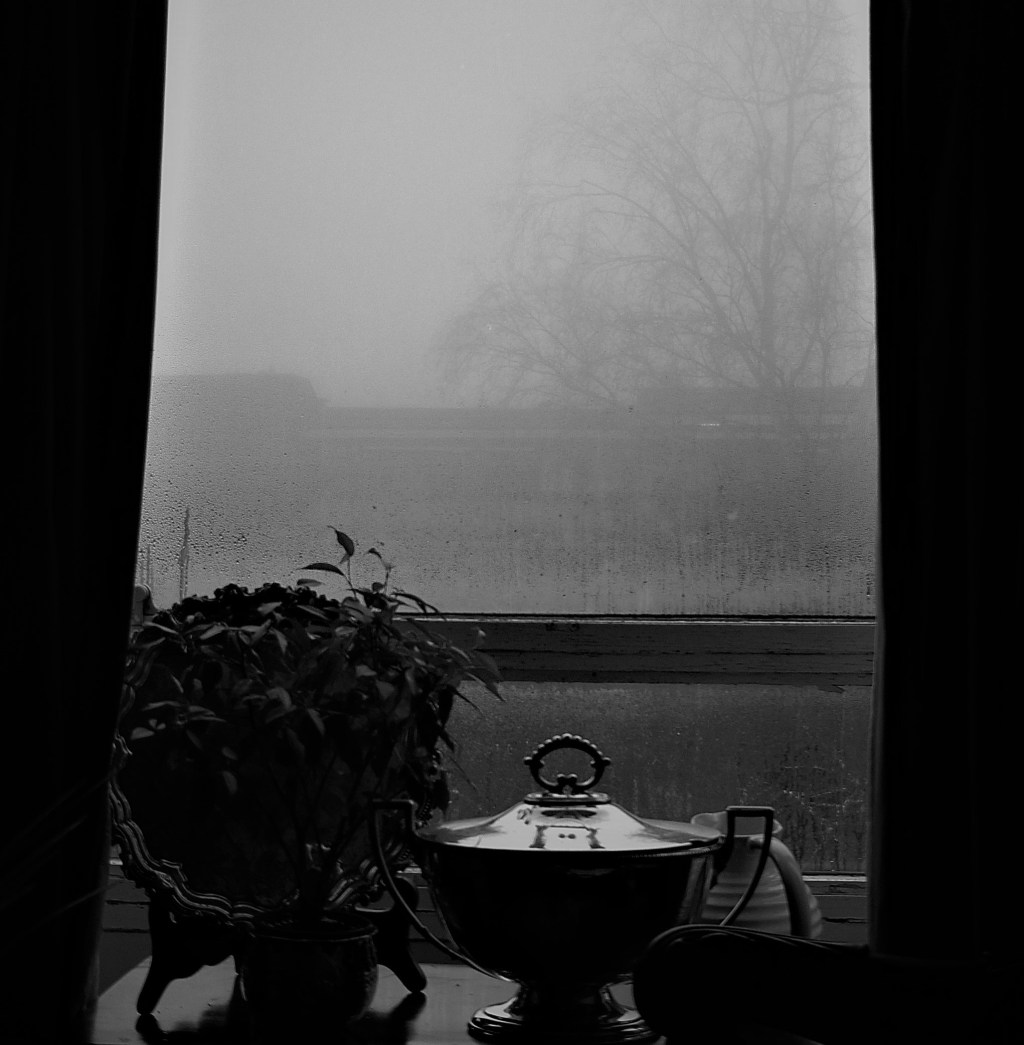
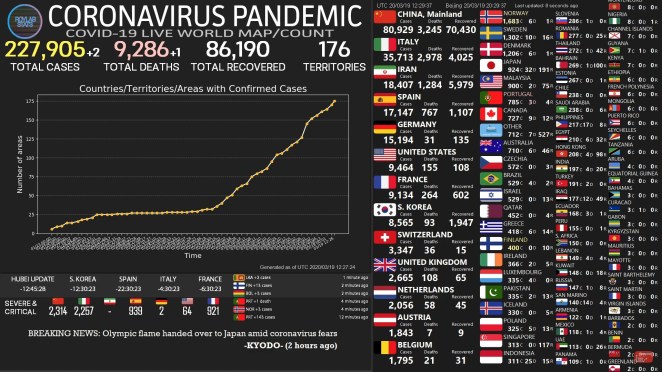
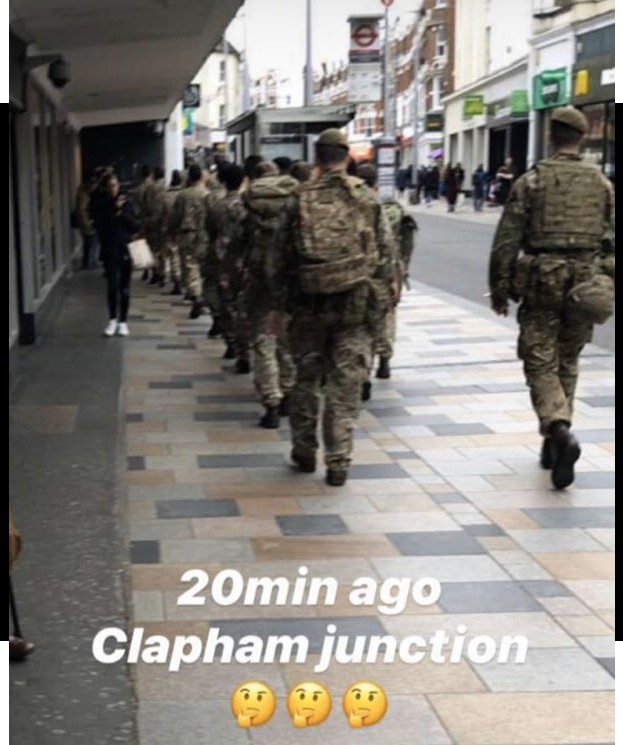

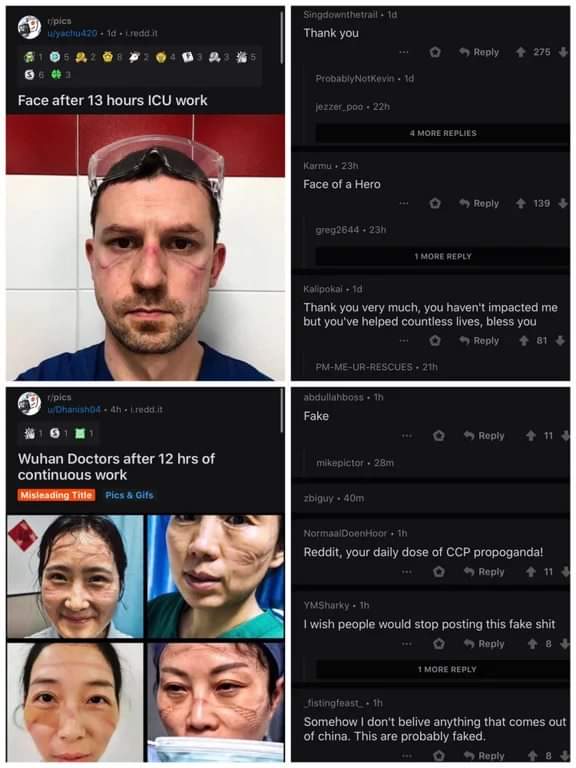

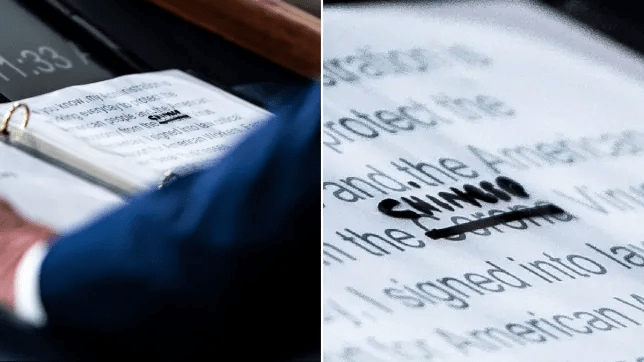

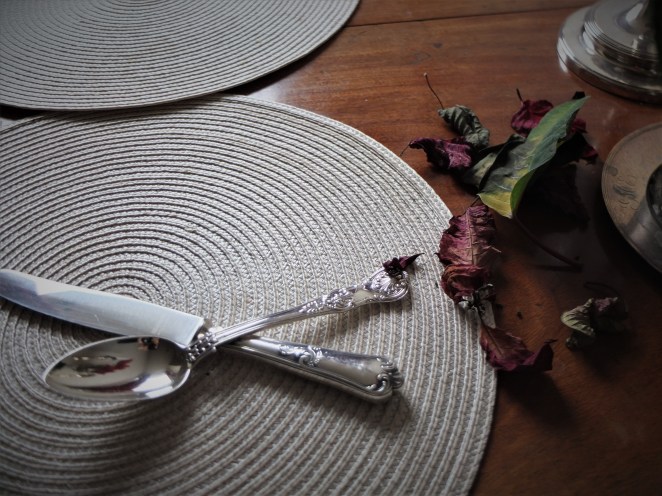


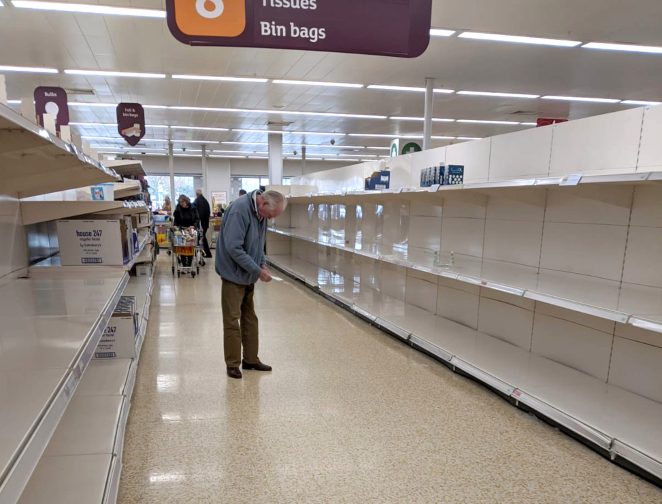

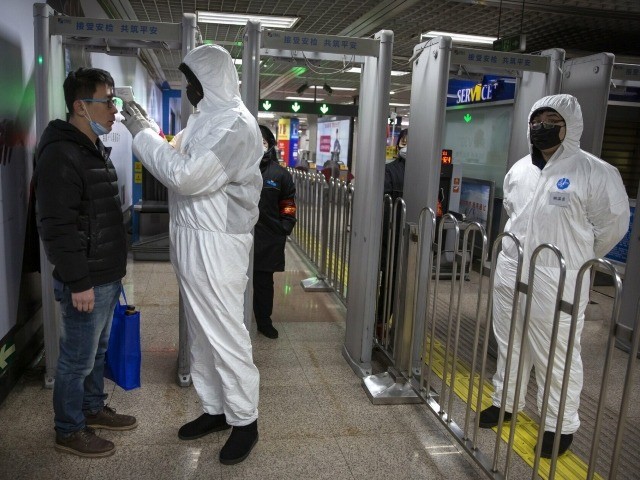


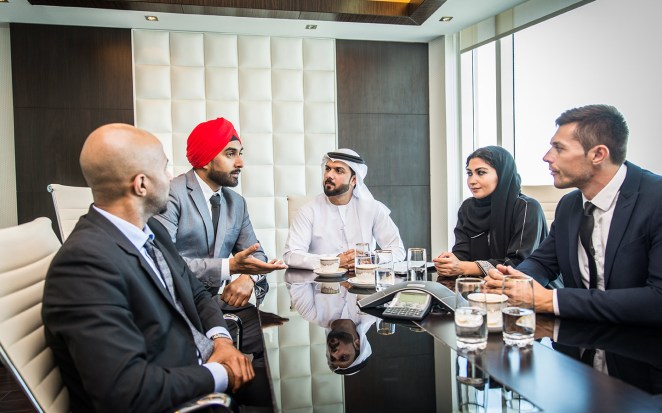


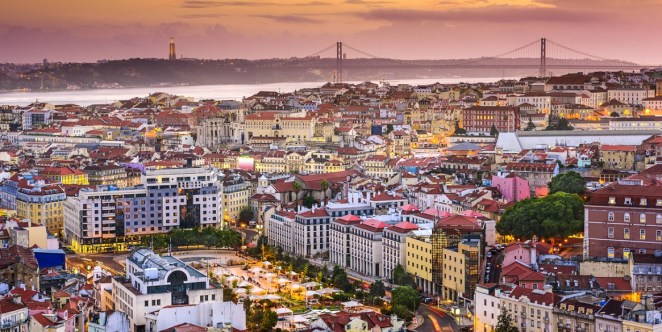
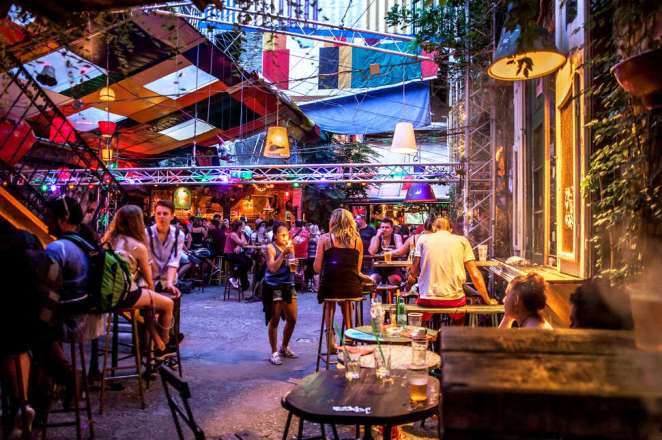
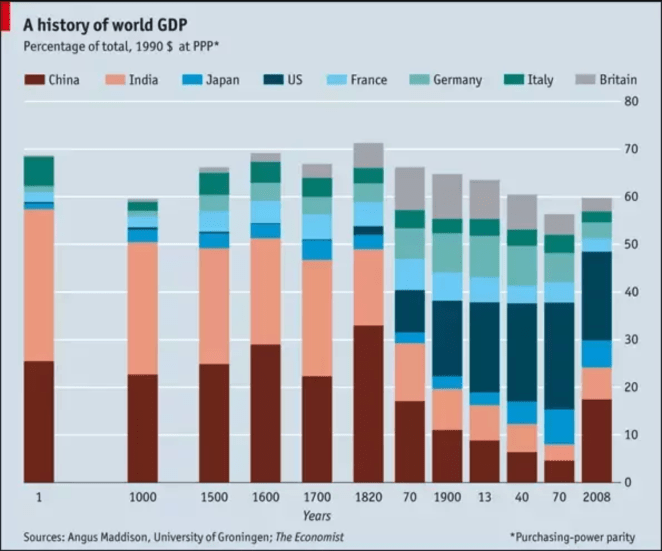
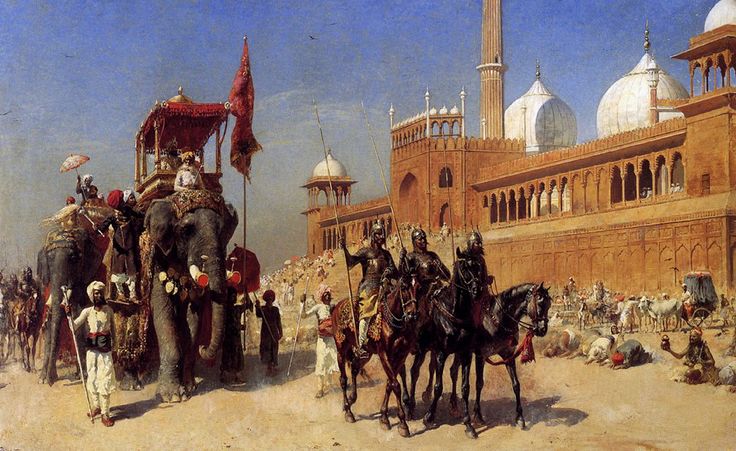
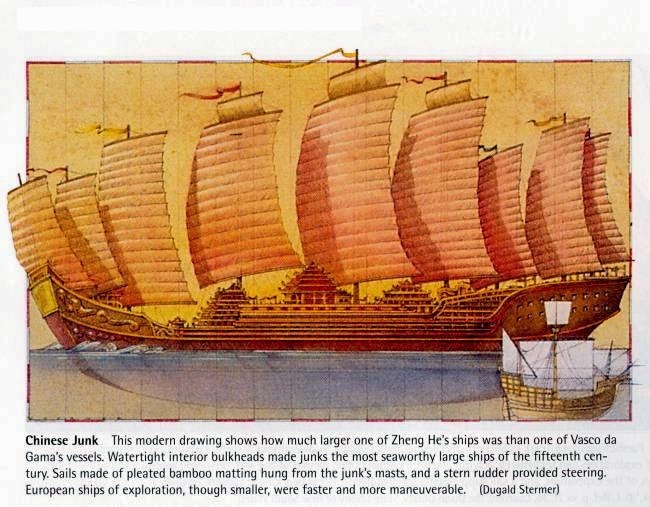

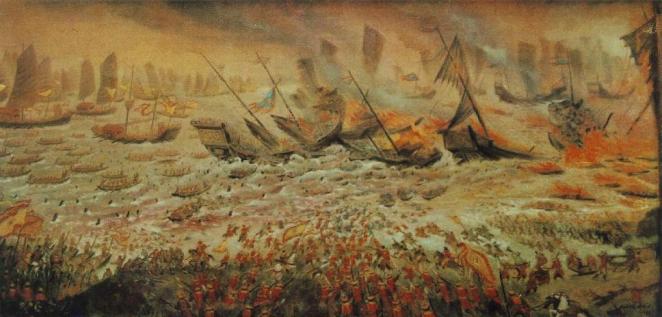
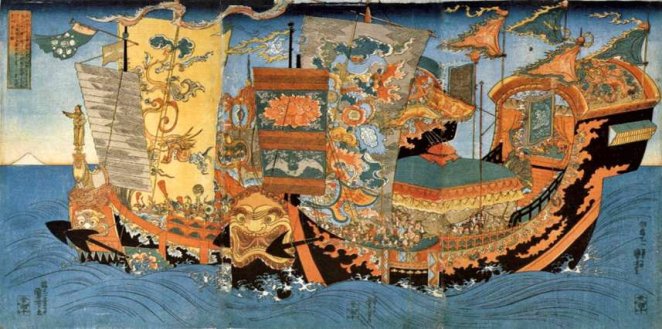









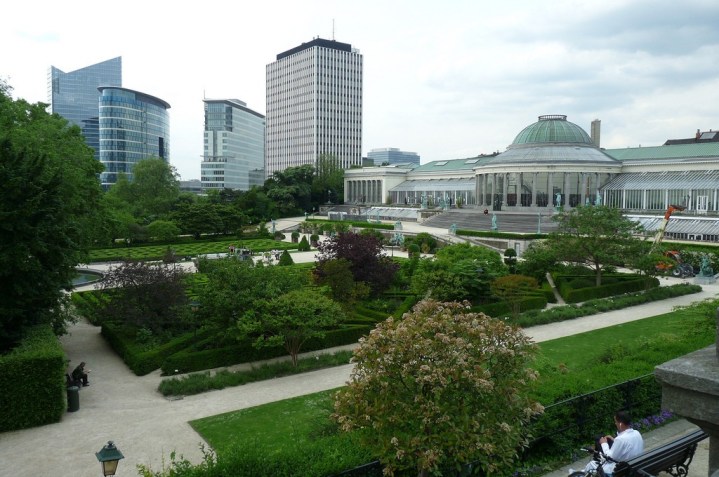

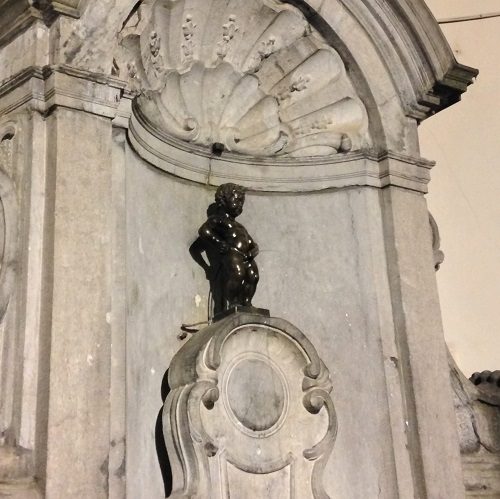

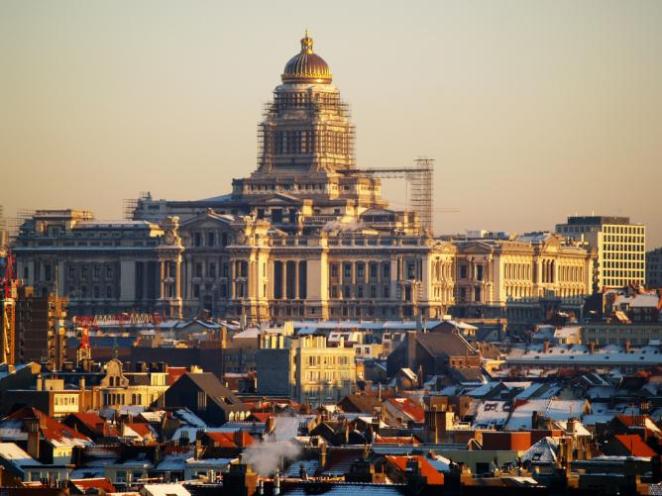


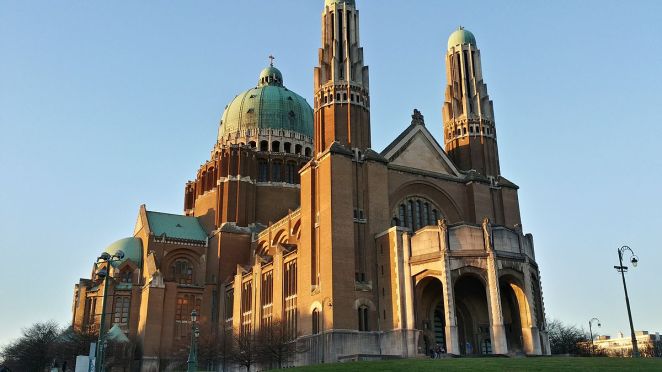


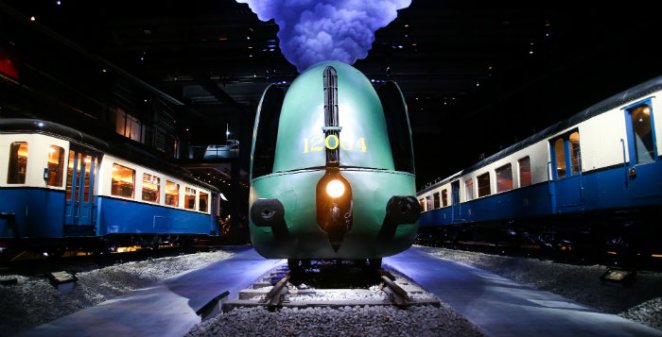

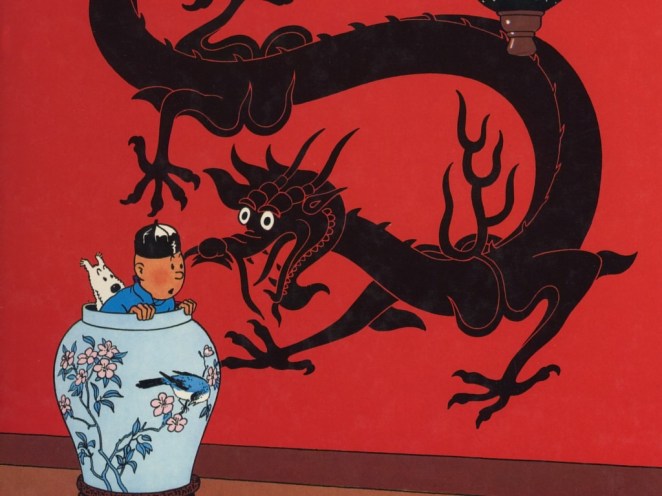
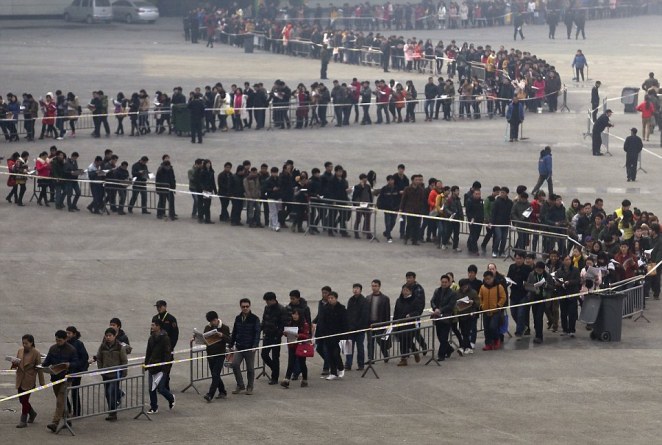



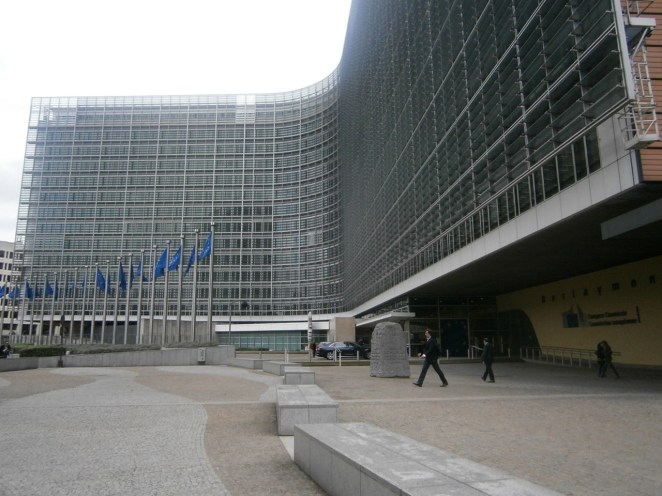


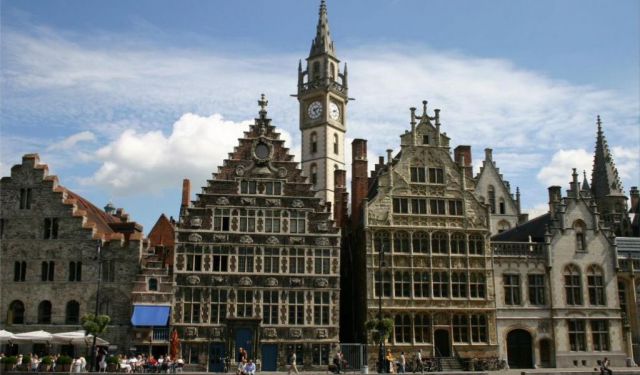
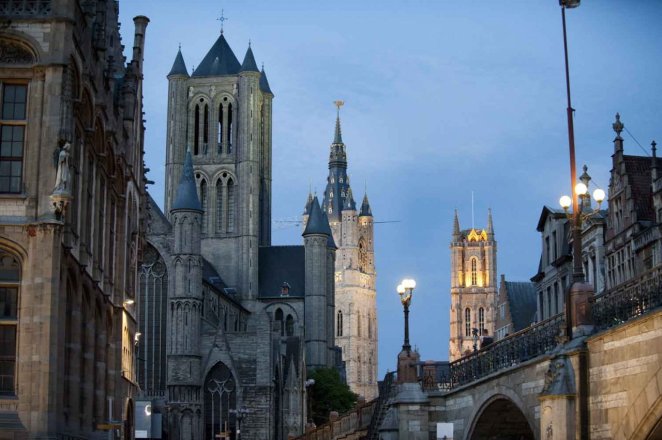
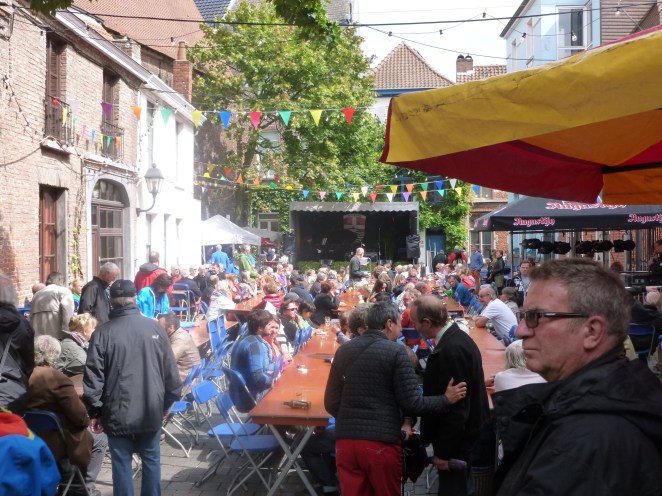
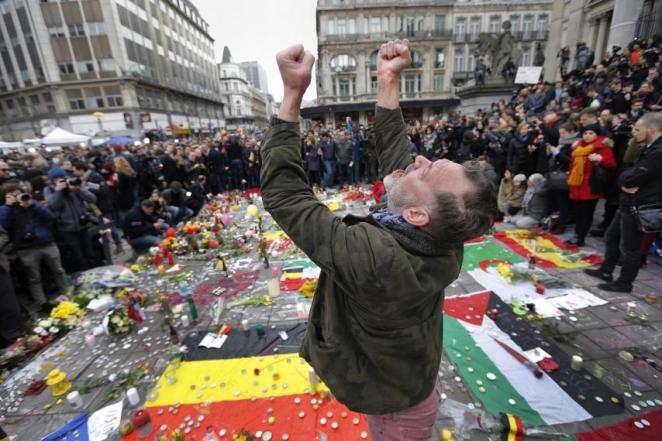
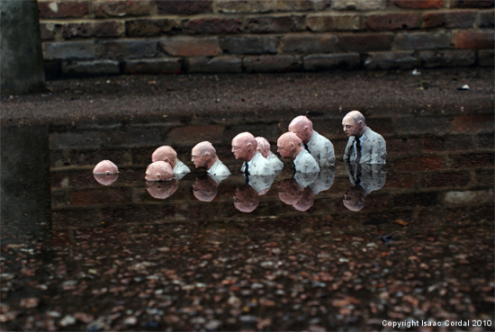



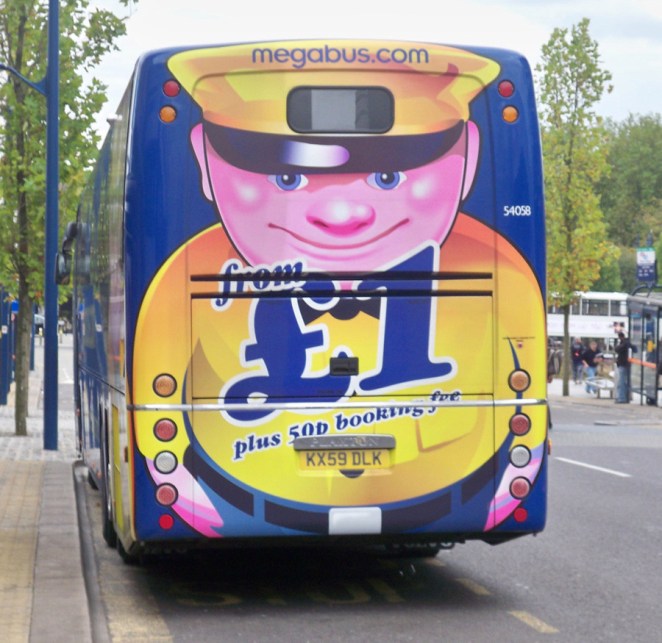
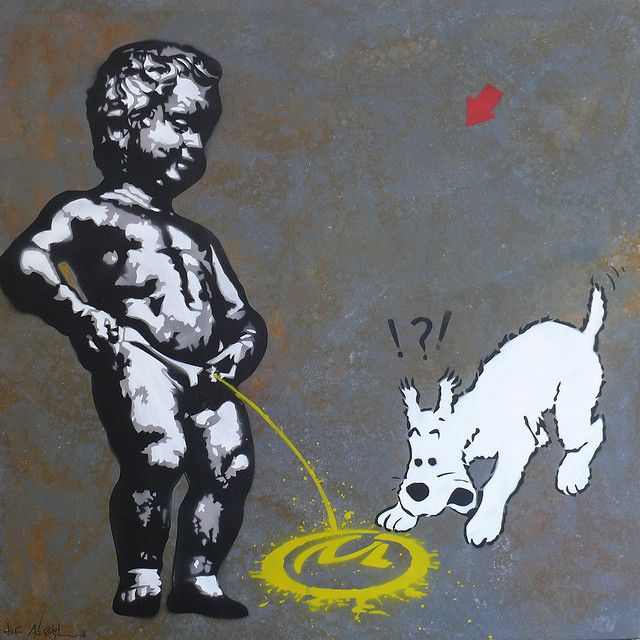




















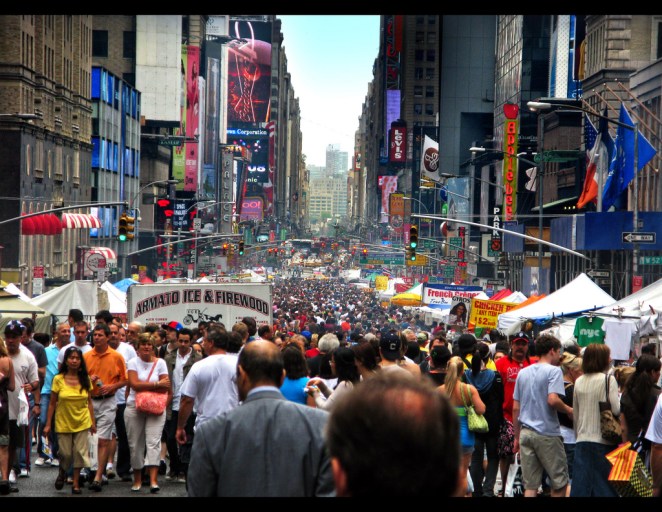
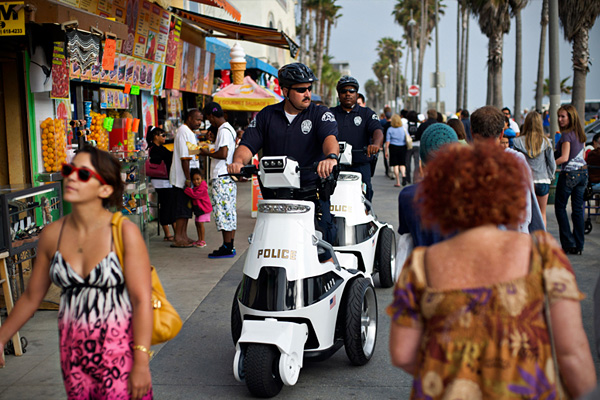
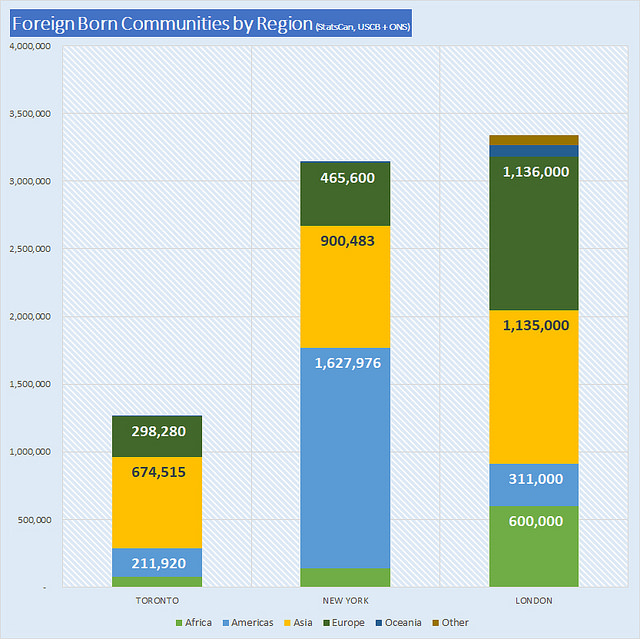
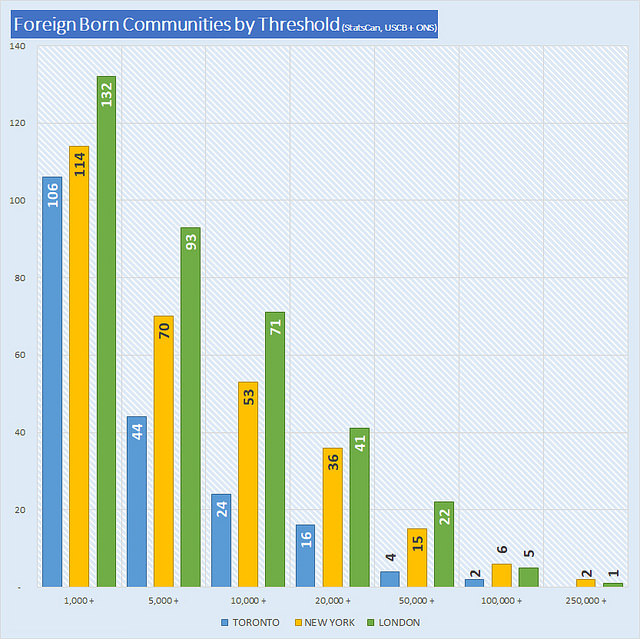

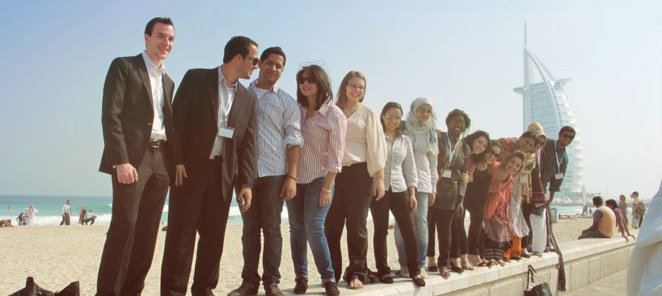
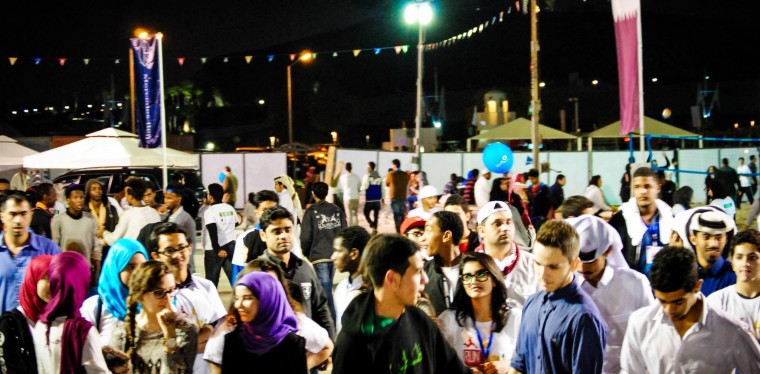


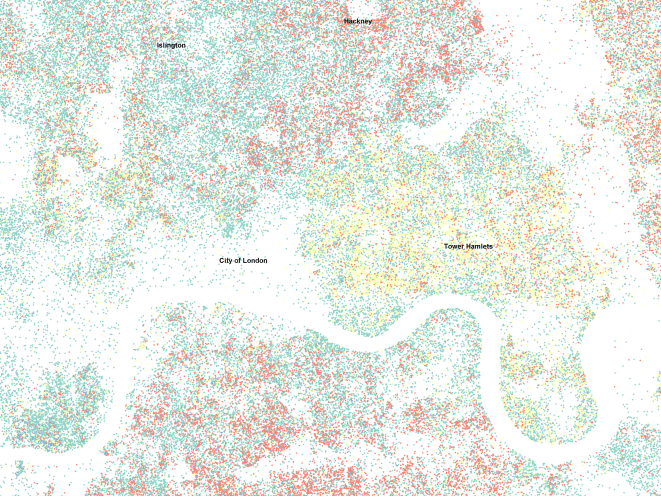


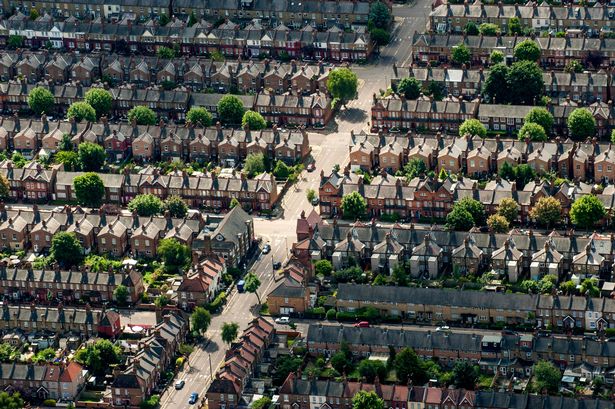
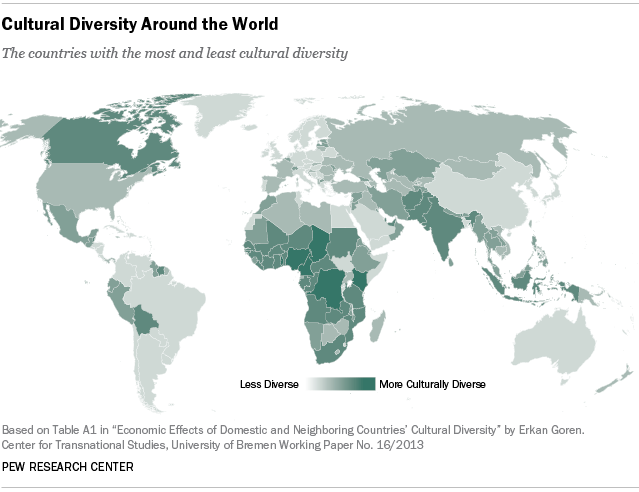
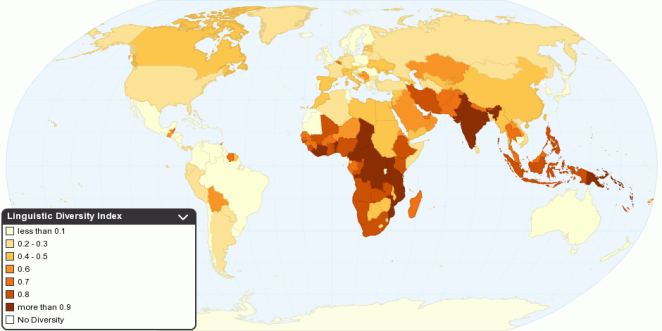
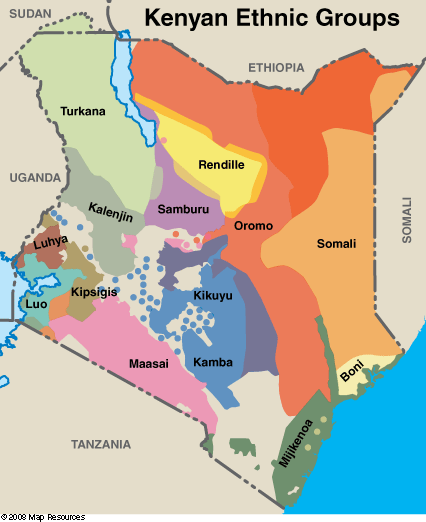
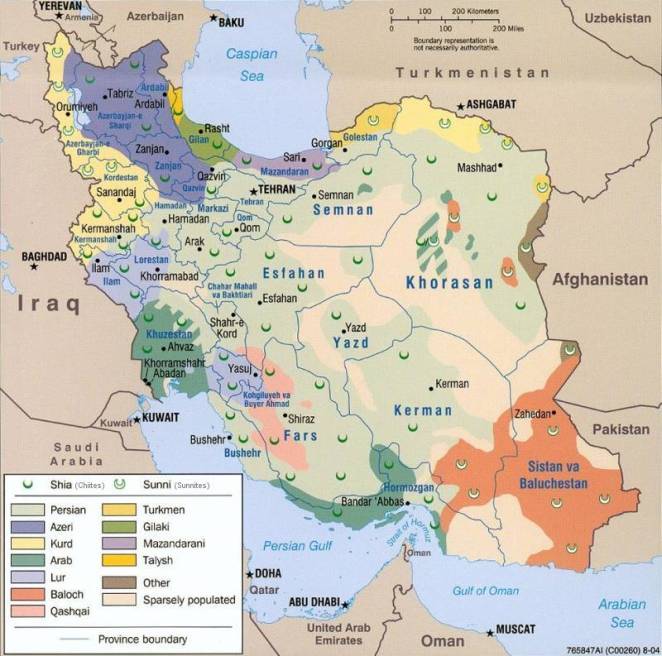
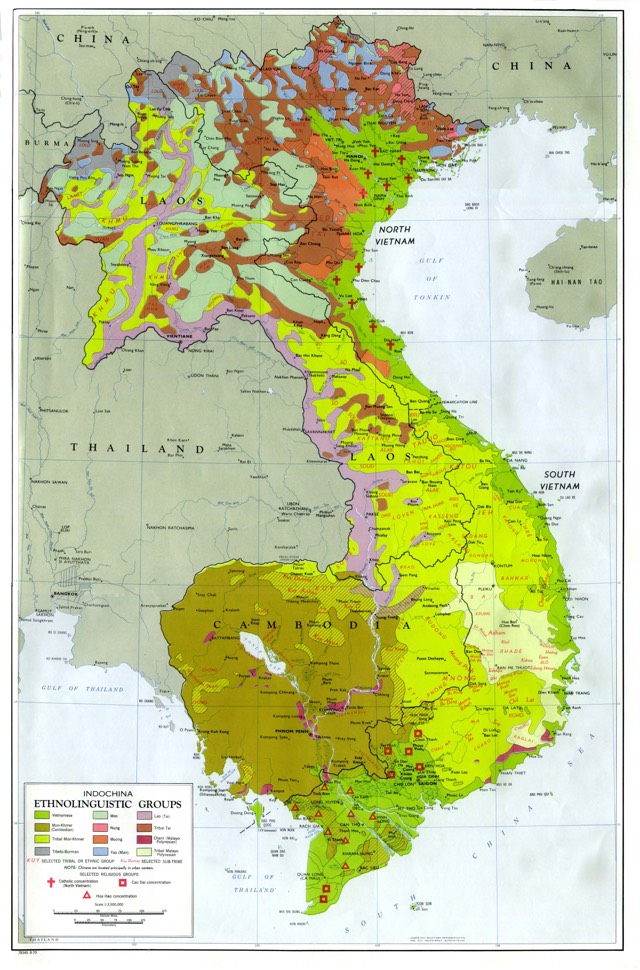

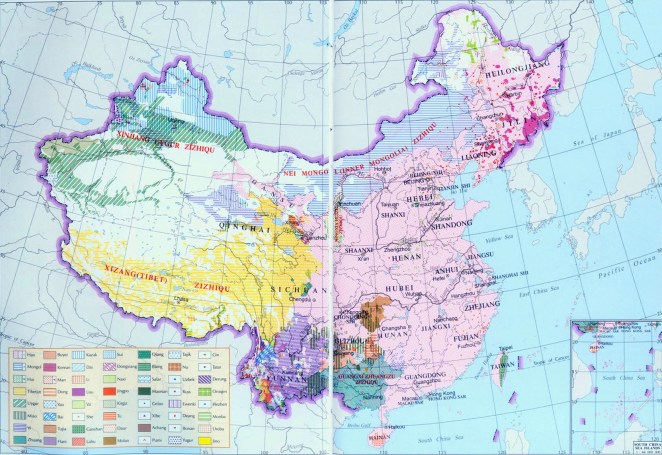
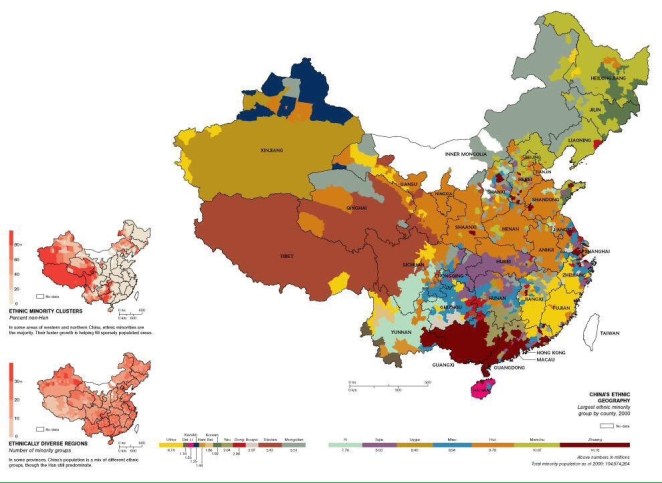


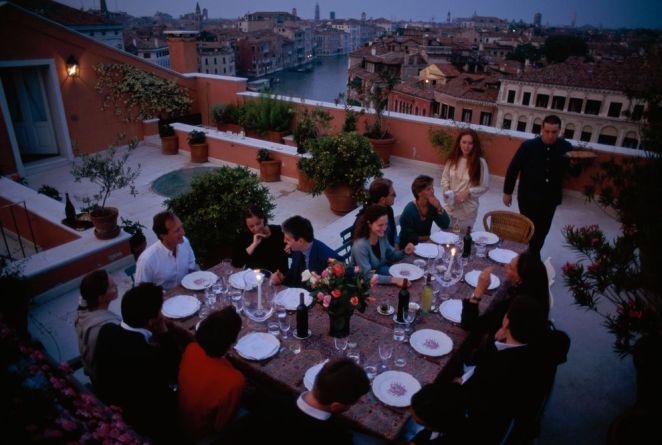
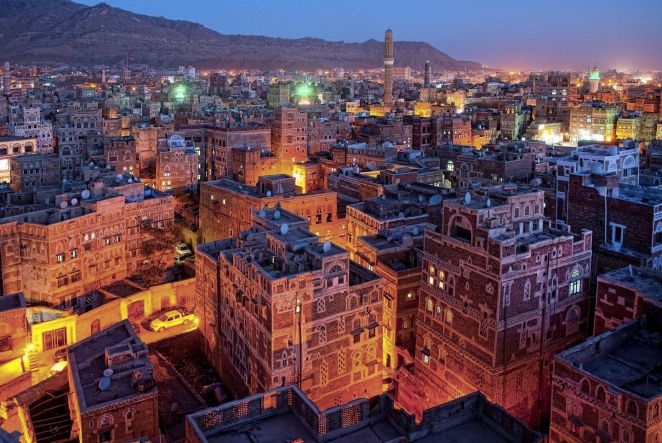
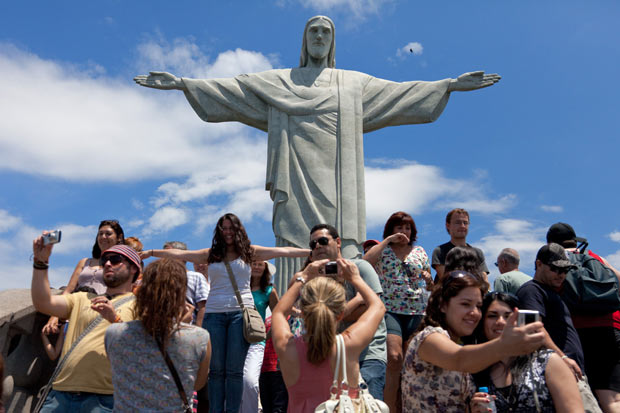


 Copenhagen,
  Jodhpur,
 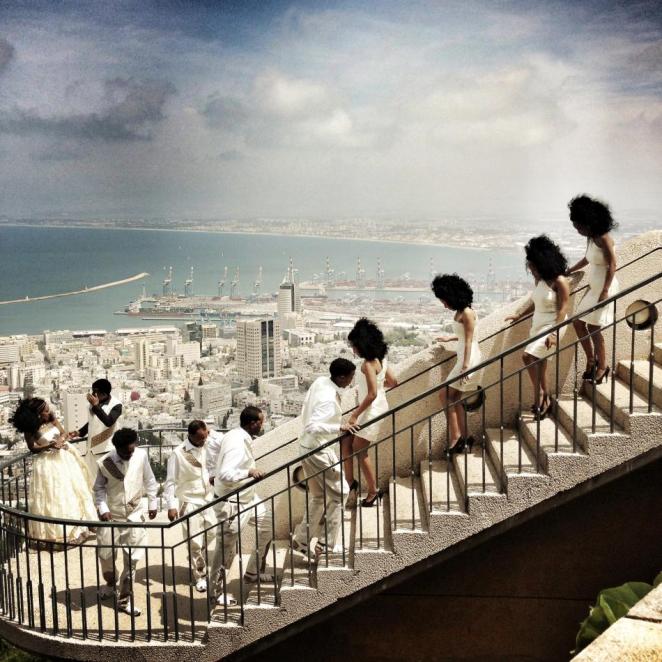 Tel Aviv,
  London
  Hanoi
Hanoi 
 supermouseblog